Email US
 Hours
Hours
 Visit Our Showroom


Best Casters for Assembly Line Equipment in Automotive Plants
Apr 1st 2026
Mobility is a fundamental factor in automotive manufacturing efficiency. Assembly lines rely on the constant movement of tools, parts, and heavy equipment, often under continuous load and tight production schedules. Without the right mobility system, even small inefficiencies can slow down operations and increase worker strain.
This is where automotive casters play a critical role. These components support the movement of assembly carts, tool racks, and transport systems across factory floors. Choosing the right casters for equipment ensures that heavy loads can be moved safely, consistently, and with minimal resistance.
However, not all casters are suited for manufacturing environments. Automotive plants demand heavy-duty industrial casters that can handle repetitive movement, high-weight loads, and abrasive concrete floors without frequent failure. Selecting the right configuration requires a clear understanding of load requirements, movement patterns, and environmental conditions.
Why Automotive Assembly Lines Need Specialized Casters
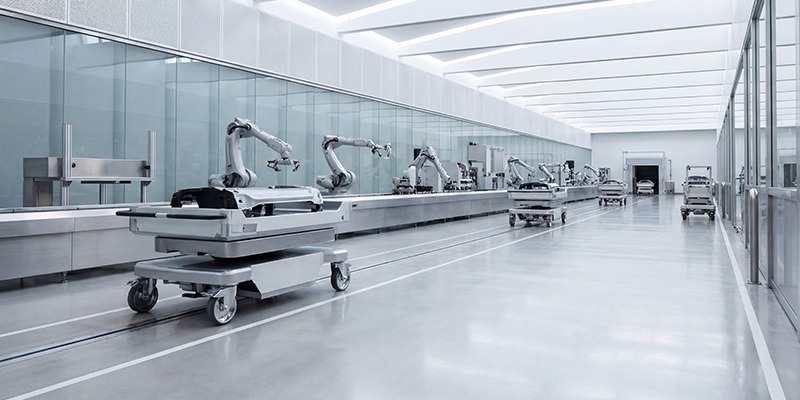
Automotive assembly lines operate under conditions that place significant stress on mobility systems. Equipment is frequently moved, often carrying heavy components such as engines, transmissions, and structural parts. These operations require equipment casters that can withstand both static and dynamic loads.
Unlike general-purpose applications, assembly line environments involve-
- Continuous movement cycles
- Heavy and uneven load distribution
- Exposure to oils, debris, and industrial chemicals
- Tight spaces requiring precise maneuverability
Tooling carts, welding stations, parts racks, and transport dollies all depend on automotive casters to maintain workflow continuity. If casters fail or perform poorly, it can lead to downtime, safety risks, and reduced productivity.
In these environments, high capacity casters are essential. They are designed to handle thousands of pounds while maintaining smooth rolling performance. Industrial casters built for manufacturing applications are engineered with reinforced frames, durable wheel materials, and precision bearings to ensure long-term reliability.
Key Features to Look for in Automotive Casters
Selecting the right caster involves evaluating several performance factors. Each feature contributes to the caster's performance under industrial conditions.
Load Capacity
Load capacity is the most critical factor when selecting heavy equipment casters. Each caster must support a portion of the total equipment weight, including any dynamic load during movement.
High capacity casters feature reinforced forks and durable wheel materials to withstand heavy loads without deformation or failure. Underestimating load requirements can lead to premature wear or unsafe operation.
Maneuverability
In automotive plants, equipment often needs to move through narrow aisles and around fixed machinery. This is where Swivel Casters become essential.
Swivel casters allow full rotational movement, enabling carts and equipment to change direction easily. This reduces operator effort and improves handling efficiency in confined spaces.
Directional Stability
While maneuverability is important, stability is equally critical when transporting heavy loads over longer distances. Rigid Casters provide fixed-direction movement, ensuring that equipment tracks in a straight line without drifting.
Combining swivel and rigid casters is a common approach in industrial setups, allowing both flexibility and control.
Durability
Automotive manufacturing environments are demanding. Casters must withstand-
- Continuous use
- Heavy loads
- Harsh floor conditions
Heavy duty casters are designed specifically for these conditions. They feature stronger materials, thicker frames, and high-performance bearings to ensure long service life.
Best Casters for Automotive Assembly Equipment
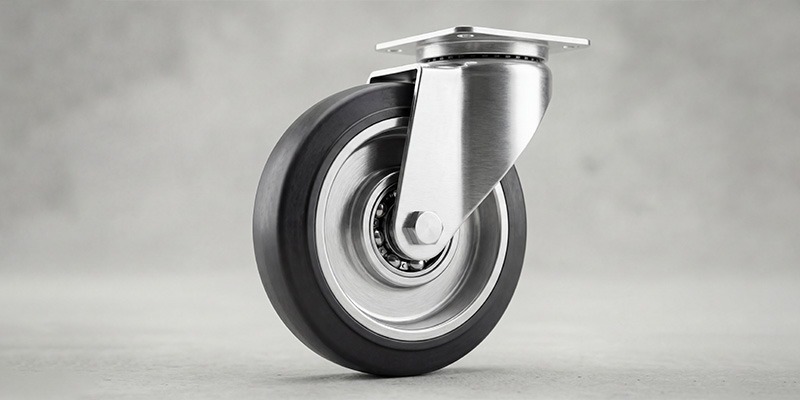
Choosing the right caster type depends on how the equipment is used within the assembly line. Different caster configurations serve different purposes.
Swivel Casters for Maneuverability
Swivel Casters are widely used in assembly line carts and mobile workstations. Their ability to rotate 360 degrees allows equipment to move freely in any direction.
This flexibility is especially useful in.
- Tight production layouts
- Workstations requiring frequent repositioning
- Areas with complex movement paths
Swivel caster wheels reduce the effort required to steer heavy loads, making them essential for improving ergonomics and operator efficiency.
However, swivel casters alone may not provide enough control for straight-line movement, especially with heavy loads. This is why they are often paired with rigid casters.
Rigid Casters for Stability
Rigid Casters are designed for straight-line movement. They do not rotate, which allows equipment to move forward and backward with greater stability.
These casters are commonly used in.
- Long transport paths within factories
- Heavy equipment movement
- Applications requiring controlled direction
Rigid caster wheels help maintain alignment and prevent drifting, which is important when transporting large or heavy components.
In most industrial setups, rigid casters are combined with swivel casters to create a balanced mobility system.
Heavy Duty Casters for Industrial Equipment
Heavy duty casters are essential for handling large loads in automotive manufacturing. These casters feature reinforced steel frames and high-strength wheels, designed to support heavy loads.
Applications include-
- Engine transport dollies
- Welding equipment stands
- Heavy assembly carts
Heavy duty industrial casters are engineered to handle both static and dynamic loads. They are designed for long-term use under demanding conditions, reducing the need for frequent replacement.
For equipment that regularly moves heavy components, investing in high-quality, heavy-duty casters improves reliability and reduces maintenance costs.
V Groove Casters for Track Systems
V Groove Casters are designed for applications where equipment follows a fixed track. These casters have a grooved wheel profile that fits onto a rail or track system.
This design ensures-
- Consistent alignment
- Reduced lateral movement
- Controlled transport paths
In automotive plants, V-groove casters are often used in-
- Automated assembly systems
- Guided transport carts
- Production line material handling
By keeping equipment aligned with a track, these casters improve precision and reduce the risk of misalignment.
Rack Casters for Storage Systems
Rack Casters are used on parts racks and storage systems that need to be moved frequently within the facility. These casters are typically designed for moderate loads and repeated movement.
Common applications include-
- Inventory racks
- Parts storage systems
- Mobile shelving units
Rack casters improve flexibility in warehouse and production environments, allowing storage systems to be repositioned as needed.
Wheel Material Options for Automotive Casters
The material of the caster wheel plays a major role in performance, durability, and floor protection. Different materials are suited to different environments.
Phenolic Casters
Phenolic Casters are made from a hard composite material designed for heavy-duty applications. They are known for-.
- High load capacity
- Resistance to heat
- Durability in harsh environments
These wheels are commonly used in applications involving heavy loads and exposure to oils or chemicals.
Polyolefin Casters
Polyolefin Casters offer a balance of durability and chemical resistance. They are resistant to moisture and various chemicals, making them ideal for environments where exposure is common.
Key benefits include-
- Low rolling resistance
- Resistance to corrosion
- Long service life
Elastomer Casters
Elastomer Casters combine the strength of hard materials with the flexibility of rubber-like compounds. They provide-
- Smooth and quiet operation
- Floor protection
- Shock absorption
Elastomer wheels are often used in environments where noise reduction and floor preservation are important.
Choosing the Best Casters for Equipment
Selecting the best caster wheels for automotive applications requires a structured approach grounded in real operating conditions. In assembly environments, casters are not just accessories-they directly influence safety, efficiency, and equipment lifespan. A poor choice results in premature wear, difficult handling, or even operational downtime. Evaluating the following factors helps ensure that the selected casters perform reliably under continuous industrial use.
1. Load Capacity
Load capacity should always be the starting point. Every caster in a setup shares the total weight of the equipment, but not always evenly, especially when loads shift during movement. It is important to calculate the combined weight of the equipment and its maximum load, then divide it among the number of casters, adding a safety margin. High-capacity casters are typically required in automotive plants to transport heavy components, such as engines or metal assemblies. Undersized casters can deform, fail prematurely, or create unsafe working conditions.
2. Wheel Material
Wheel material determines how the caster performs under load and how it interacts with the floor. Hard materials like phenolic provide strength and durability for heavy loads, while softer materials like elastomer offer quieter operation and floor protection. Polyolefin wheels are often selected for their resistance to chemicals and moisture. The choice should reflect both the working environment and the nature of the load being transported.
3. Floor Conditions
Factory floors, typically made of concrete, create constant friction and wear on caster wheels. Over time, poor material selection can lead to flat spots, cracking, or increased rolling resistance. Durable wheel materials that resist abrasion are essential in these conditions. Smooth rolling performance is also important, as it reduces the force required to move equipment and improves overall workflow efficiency.
4. Mobility Requirements
Not all equipment requires the same level of maneuverability. Some applications benefit from full directional movement, while others require straight-line tracking. Swivel casters allow flexibility in tight spaces, making them suitable for assembly carts and mobile workstations. Rigid casters, on the other hand, provide stability and are better suited for long-distance movement. Many setups use both to achieve balanced performance.
5. Mounting Type
The mounting method must match the equipment design. Plate mounts provide strong attachment and better load distribution, while stem mounts are used for more compact or specialized setups. Proper installation ensures that the caster remains secure during operation and prevents unnecessary stress on both the caster and the equipment.
Expert Tips for Assembly Line Caster Setup
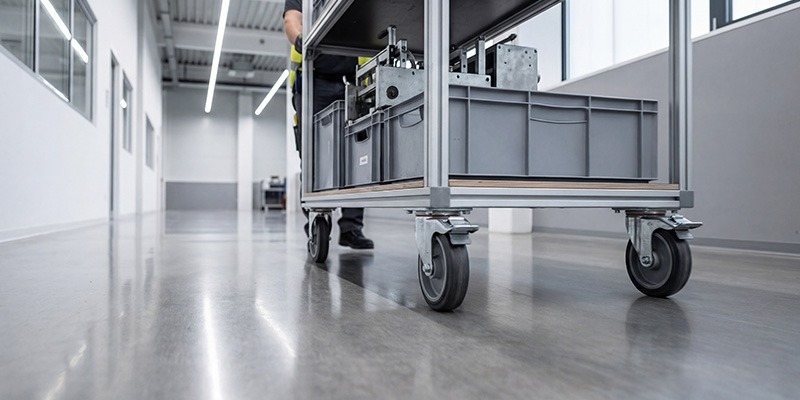
In automotive manufacturing, caster configuration is not just about mobility-it directly affects safety, operator effort, and long-term equipment performance. A well-planned setup can reduce strain on workers, improve movement control, and extend the lifespan of both casters and equipment.
Combine Swivel and Rigid Casters Strategically
One of the most effective configurations is using a combination of Swivel Casters and Rigid Casters. Swivel casters provide the flexibility needed to navigate tight assembly areas, while rigid casters maintain straight-line tracking. A common approach is to place swivel casters at the front and rigid casters at the rear of the equipment. This setup allows operators to steer easily while maintaining control during forward movement, especially when transporting heavy components across longer distances.
Focus on Ergonomics and Operator Effort
Caster selection plays a key role in reducing workers' physical strain. High-quality wheels with low rolling resistance require less force to move, improving handling and reducing fatigue during repetitive tasks. In assembly line environments where equipment is moved frequently, even small reductions in push force can make a noticeable difference in productivity and worker comfort. Choosing the right wheel material and size also contributes to smoother movement over concrete floors.
Prioritize Routine Maintenance
Regular inspection and maintenance keep equipment casters performing at their best. Over time, debris such as metal shavings, dust, or grease can accumulate in the wheel or swivel mechanism, affecting movement. Periodic checks for wear, flat spots, loose fittings, and misalignment help prevent unexpected failures. Replacing worn components early reduces downtime and avoids larger operational disruptions.
Use High-Capacity Casters for Long-Term Reliability
In demanding automotive environments, high-capacity casters provide the durability needed for continuous use. These casters can handle heavy loads without compromising performance. Investing in properly rated casters ensures consistent operation, reduces maintenance frequency, and supports safe handling of heavy equipment throughout the production cycle.
Frequently Asked Questions
1. What are automotive casters used for?
Automotive casters are used to move assembly-line equipment, such as carts, racks, and transport systems. They enable efficient material handling and reduce manual effort in manufacturing environments.
2. What are the best caster wheels for heavy equipment?
The best caster wheels for heavy equipment are heavy-duty industrial casters with high load capacity and durable materials. These casters are designed to handle continuous heavy loads and harsh conditions.
3. What materials are best for industrial casters?
Common materials include Phenolic Casters, Polyolefin Casters, and Elastomer Casters. Each material offers different benefits such as durability, chemical resistance, or floor protection.
4. How do swivel casters differ from rigid casters?
Swivel Casters allow full directional movement, while Rigid Casters provide straight-line stability. They are often used together to balance maneuverability and control.
5. What load capacity should assembly line casters have?
Assembly line casters should have a load capacity that exceeds the total weight of the equipment divided by the number of casters. High-capacity casters are typically required for heavy industrial applications.