Email US
 Hours
Hours
 Visit Our Showroom


Best Casters for Manufacturing Plants- Durability & Safety Considerations
Mar 4th 2026
Manufacturing plants are busy environments where equipment, machinery, and materials need to be moved frequently, efficiently, and safely. The type of casters you choose plays a pivotal role in streamlining operations, minimizing downtime, and maintaining safety standards. Casters are the unsung heroes of manufacturing logistics, enabling the easy movement of heavy loads while supporting high-capacity demands and operating in extreme environmental conditions. In this article, we will explore the best casters for manufacturing plants, emphasizing durability, safety, and the importance of selecting the right type for specific applications.
Choosing the best industrial casters and heavy duty casters is not just about strength- you also need to consider the specific environment and conditions in which these casters will be used. Temperature, load capacity, and movement requirements all play a role in making the right decision. In this article, we will dive into the various types of casters, durability factors, and safety considerations to help you make an informed decision when outfitting your manufacturing plant.
Key Highlights
- Heavy duty casters and industrial casters are essential for high-capacity operations.
- Locking casters provide increased safety in manufacturing environments.
- Heat casters and high-temperature casters are ideal for extreme conditions.
- Kingpinless casters offer superior durability in heavy-duty applications.
- Custom casters cater to specialized needs in various manufacturing settings.
Understanding Casters in Manufacturing Plants
At the heart of any effective manufacturing plant is efficient mobility. Casters are designed to enable equipment and machinery to move with minimal effort, improving workflow and overall efficiency. They come in different designs, each tailored to specific needs. Industrial casters and wheels are specifically designed for heavy duty tasks, such as moving large machinery, manufacturing equipment, or materials on the factory floor.
The types of casters used in manufacturing plants vary based on the application. For example, rigid casters are ideal for straight-line movement, whereas swivel casters are ideal for more flexible, multidirectional mobility. In manufacturing environments where heavy loads are the norm, high-load-capacity casters are the go-to option. These casters are built to carry heavy weights, providing enhanced support and durability under demanding conditions.
Selecting the correct type of caster for your plant is essential to ensuring that the equipment moves smoothly and safely. If you choose the wrong caster, you risk inefficiencies, increased operational costs, and even equipment damage.
Durability Factors to Consider for Manufacturing Casters
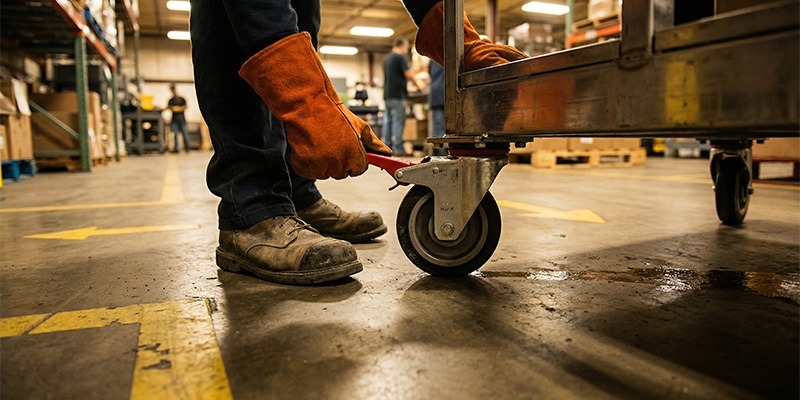
Casters used in manufacturing plants face harsh conditions. They are subjected to heavy loads, constant movement, and extreme wear and tear. When choosing heavy duty casters, durability is the primary consideration. The material composition of the caster, such as the wheel type, axle, and bearings, plays a major role in how well it will last under high-stress environments.
For heavy-duty applications, high capacity casters made from materials like steel or polyurethane are ideal. Steel casters are exceptionally durable and wear-resistant, making them suitable for handling the weight of large machinery and equipment. Polyurethane wheels are known for their resilience and ability to absorb shock, providing a smoother ride over rough surfaces. These materials ensure that the casters can handle constant use without wearing out too quickly.
Another durability factor is the caster’s ability to withstand high-impact conditions. Shock absorbing casters are designed to handle impact forces, such as those experienced when heavy loads are dropped or moved over uneven surfaces. These casters use a combination of resilient materials and special design features to minimize the impact on both the caster and the items it carries.
Lastly, consider the environment in which the casters will operate. If the manufacturing plant operates in extreme conditions-whether it’s high temperatures, corrosive chemicals, or heavy dust-you’ll need casters that can withstand these challenges. Heat and high temperature casters are designed to withstand temperatures up to 450°F and beyond, making them ideal for high-temperature environments such as ovens or foundries.
Safety Considerations When Choosing Casters
In any manufacturing environment, safety is paramount. Using the right casters can significantly reduce the risk of accidents and injuries. One of the most essential safety features to consider when selecting casters is whether they include locking mechanisms. Locking casters prevent the wheels from rotating when the equipment is stationary, ensuring that it doesn’t accidentally move when you don’t want it to.
Manufacturing plants often have high-traffic areas where workers may need to temporarily park equipment. Without a locking caster, equipment could roll away, leading to potential injuries or damage. In addition to locking mechanisms, casters that allow for rigid movement can also help control direction and prevent unintended movement. Rigid casters provide straight-line movement and, when used correctly, can enhance safety by preventing unwanted swiveling.
When selecting casters, it’s essential to choose ones that fit the plant’s layout. In plants where space is tight and maneuverability is key, swivel casters are ideal for allowing equipment to move in any direction. However, in more structured environments, rigid casters are necessary to maintain control and avoid unnecessary movement.
Lastly, don’t overlook the importance of shock-absorbing casters in ensuring safe operations. These casters are especially useful for preventing damage to delicate equipment or fragile products during plant movement. The ability to absorb shocks from rough handling or sudden movements adds an extra layer of safety and protection to your operations.
Types of Casters and Their Applications in Manufacturing

Casters come in many shapes and sizes, each designed for specific tasks. High temperature casters, for example, are ideal for environments where the equipment is exposed to extreme heat, such as in metalworking plants or furnace operations. These casters are made from specialized materials that resist melting, warping, and cracking at high temperatures, ensuring safe and reliable performance in hot environments.
On the other hand, kingpinless casters are perfect for high-stress environments where durability is crucial. Unlike traditional casters, which rely on a kingpin to hold the wheel assembly together, kingpinless casters feature a streamlined design that eliminates the risk of failure from stress or impact. These casters are ideal for heavy-duty applications such as moving industrial machinery, where high load capacity and long-lasting performance are essential.
Custom casters are another option for manufacturing plants with unique requirements. Whether it's a specific load-bearing capacity, material composition, or design, custom casters can be tailored to meet the plant’s precise needs. Custom solutions help ensure that your casters are optimally suited to the specific demands of your manufacturing process.
Specialty casters are often required in environments where standard casters may not suffice. Whether it's casters that provide anti-static properties for electronics manufacturing or those designed for clean rooms where sanitation is paramount, specialty casters can offer the perfect solution for these niche applications.
Custom Casters for Specialized Manufacturing Needs
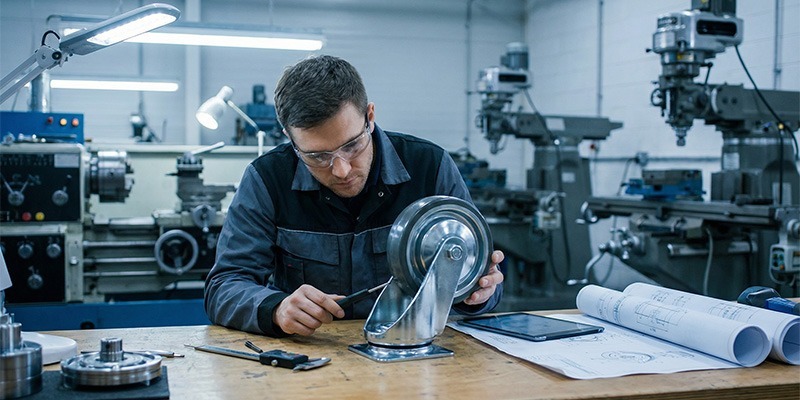
Some manufacturing environments require casters with specific attributes to meet unique operational needs. In these situations, custom casters are the best solution. Custom casters can be designed to meet precise requirements, whether it’s for extreme load capacities, specific materials, or design features such as size, shape, or wheel type.
For example, some manufacturing plants require casters with wheels made from a unique blend of materials that can resist abrasion or chemical exposure. Custom casters can be created using a combination of polyurethane, steel, and other materials to provide the necessary durability and strength.
Another area where custom casters excel is in highly specialized operations, such as in aerospace or cleanroom environments. In these settings, the casters must meet stringent safety, cleanliness, and performance standards. Specialty casters designed for these applications can ensure your equipment moves smoothly without compromising safety or compliance with environmental regulations.
Heat and High-Temperature Casters for Industrial Environments
Manufacturing plants that operate at high heat or extreme temperatures require casters that can withstand these conditions without failing. Heat and high temperature casters are specifically designed for environments where temperatures exceed the limits of standard casters. These casters are built to withstand temperatures up to 450°F, making them ideal for industries such as food processing, metalworking, and ceramics.
Made from heat-resistant materials such as phenolic, high temperature casters provide reliable performance in ovens, furnaces, and other high-heat areas of the plant. Their durable construction ensures they won’t degrade or lose performance in extreme temperatures, which is crucial for keeping operations running smoothly and safely.
Kingpinless Casters- A Superior Option for Heavy-Duty Applications
For industries that require heavy-duty operations, kingpinless casters provide superior durability and reliability. These casters are designed without a kingpin, which is the central bolt that typically holds the wheel assembly together. By eliminating the kingpin, these casters reduce the risk of failure and provide a smoother, longer-lasting performance in heavy-duty environments.
Kingpinless casters are ideal for moving heavy machinery, equipment, and other high-load items in manufacturing plants. Their robust construction can withstand various industrial applications, including frequent use and exposure to rough surfaces.
Wrapping up
Choosing the right casters for your manufacturing plant is crucial to ensuring efficiency, durability, and safety. By selecting the appropriate heavy duty, industrial, locking, or heat resistant casters, you can significantly improve operations and minimize risks.
If you're unsure which caster type best suits your specific needs, consider working with a supplier like Atlanta Caster, which offers expert advice and high-quality solutions tailored to your manufacturing environment. Whether you need custom casters, kingpinless casters, or shock-absorbing casters, Atlanta Caster has the experience and products to help you find the perfect solution for your plant.
FAQs
1. What are the important factors to consider when selecting casters for a manufacturing plant?
When selecting casters, consider factors such as load capacity, environmental conditions (e.g., heat or chemicals), mobility requirements, and safety features, such as locking mechanisms.
2. What is the difference between rigid and swivel casters?
Rigid casters provide straight-line movement and are ideal for equipment that doesn’t need to change direction, while swivel casters allow for multidirectional movement, making them suitable for tight spaces.
3. How do heat-resistant casters work in manufacturing plants?
Heat-resistant casters are designed with materials that withstand high temperatures, making them ideal for environments such as food processing plants and metalworking facilities where heat exposure is everyday.
4. Can custom casters be designed for specific manufacturing applications?
Yes, custom casters can be tailored to meet unique requirements such as load capacity, material composition, or special features for niche manufacturing environments.
5. Why are locking casters important for safety in manufacturing plants?
Locking casters prevent equipment from moving unexpectedly, reducing the risk of accidents and improving safety when machinery is stationary.