Email US
 Hours
Hours
 Visit Our Showroom


How to Choose the Right Caster Wheels for Your Floor Type (Concrete, Tile, Epoxy, etc.)
Dec 30th 2025
Many caster problems stem from using the wrong wheel for your floor.
If you've ever dragged a rolling chair across hardwood and noticed scratches or heard a loud rattle on concrete, chances are the caster wheel wasn't designed for that floor type. Mismatched casters can damage surfaces, reduce maneuverability, and lead to premature failure of both the wheel and the equipment it supports.
Whether you're managing a warehouse, outfitting furniture, building carts, or replacing old wheels, floor compatibility is a crucial part of caster selection. With dozens of types of casters and materials available, it's easy to choose the wrong one without guidance.
This guide simplifies the process. At Atlanta Caster, we help facility managers, builders, and homeowners select the best caster wheels for every application—from smooth hardwood floors to rough concrete surfaces. With the right wheel, your equipment rolls quietly, safely, and without damaging your flooring.
By the end of this guide, you'll understand which caster works best on each surface and how to choose rolling caster wheels that match your load, space, and usage needs.
Key Takeaways
- Always match caster material to your floor type for optimal performance
- Use non-marking caster wheels on hardwood, tile, and epoxy to prevent damage
- Choose casters for concrete floors with high-durability materials like phenolic or forged steel
- Carpeted floors require large-diameter, firm-tread wheels to reduce resistance
- Replace worn or damaged wheels early to avoid floor damage and uneven rolling
- Maintain your replacement caster wheels regularly to extend their lifespan
Why Floor Type Matters When Choosing Casters
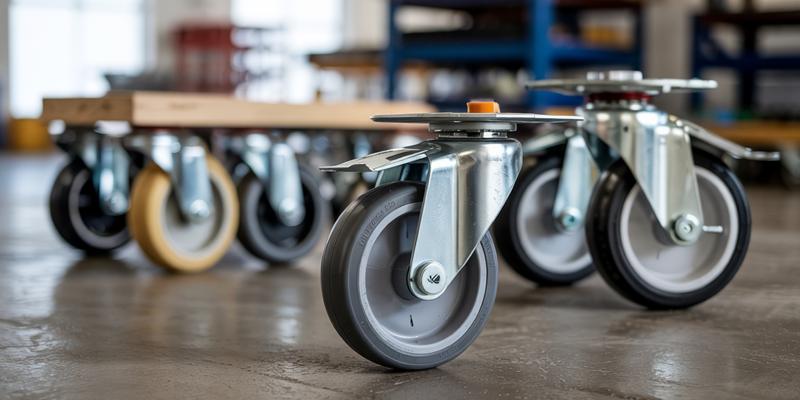
Choosing the wrong caster can do more than create annoying noise—it can permanently damage floors, reduce safety, and cost more in maintenance and repairs. Matching the wheel material to your floor ensures smoother movement, longer wheel life, and protection for your surface.
How Different Floors Affect Caster Performance
Concrete Floors
Concrete is unforgiving. It's often uneven, coarse, and full of cracks or debris. For these surfaces, wheels need to be tough, impact-resistant, and able to carry significant loads without chipping or breaking. Smooth or soft wheels wear down quickly and may cause jarring movement.
Hardwood Floors
Wood floors are soft and prone to scratching or denting. Wheels for hardwood need to roll smoothly with minimal pressure points. Soft treads and wide wheels help distribute weight and protect the finish.
Tile and Epoxy Floors
Tile and epoxy are smooth and usually coated to resist chemicals or moisture. However, they can be slippery. Caster wheels must roll without sliding or leaving marks. Traction, chemical resistance, and quiet operation are key factors.
Carpeted Surfaces
Casters struggle on carpet due to friction. Small or soft wheels sink into the carpet pile, making it harder to move equipment. Larger diameter and harder wheels reduce resistance and make it easier to roll over carpet.
Common Floor Damage Issues
- Scratches
Hard plastic or metal wheels can leave deep marks on hardwood or tile if used improperly. - Scuffs and Marks
Black rubber wheels may leave unsightly trails across light-colored floors. Non-marking caster wheels this issue by using specially formulated treads. - Indentations
Heavy loads combined with narrow wheels can cause dents in wood or epoxy, especially if casters remain stationary for long periods. - Slipping and Instability
On polished tile or epoxy, standard wheels may slide out of control. Non-slip casters provide better grip and prevent roll-away hazards.
Types of Casters Explained
There is no one-size-fits-all caster. Understanding caster types helps you select the right one for your environment.
Swivel vs Rigid Casters
Swivel Casters
These casters rotate 360 degrees, allowing easy maneuvering in tight spaces. They're ideal for carts, furniture, and medical equipment that require frequent repositioning.
Advantages:
- Enhanced mobility
- Navigate tight turns
- Quick directional changes
Drawbacks:
- Can drift when pushing in straight lines
- Slightly less stable under heavy loads
Rigid Casters
Rigid casters only roll forward or backward. They don't rotate, offering more control in linear paths.
Advantages:
- Excellent tracking for straight-line travel
- Stronger under heavy loads
- More stable on uneven surfaces
Drawbacks:
- Limited maneuverability
- Not ideal for small, confined spaces
Tip: For balanced movement, use two swivel and two rigid casters on most carts or furniture.
Material-Based Types of Casters
Each wheel material behaves differently on various surfaces. Here's a breakdown:
| Wheel Material | Best Floor Type | Noise Level | Durability | Other Notes |
| Rubber | Hardwood, Tile | Very Low | Moderate | Excellent grip and quiet movement |
| Polyurethane | Hardwood, Epoxy, Tile | Low | High | Non-marking, great for indoor use |
| Nylon | Concrete, Carpet | Medium | High | Lightweight, handles chemicals |
| Phenolic | Concrete, Epoxy | Medium | Very High | High load capacity, heat-resistant |
| Forged Steel | Rough Concrete, Outdoor | High | Very High | Best for extreme loads, industrial |
| Thermoplastic | Tile, Wood | Very Low | Moderate | Soft tread, suitable for delicate floors |
Specialty Casters
- Non-slip Casters: Added grip for slippery or polished floors. Essential for safety in hospitals, labs, and commercial kitchens.
- Soft Casters for Hardwood: Designed with rubberized treads that protect against scuffs and scratches.
- Heavy Duty Casters: Typically made from forged steel or phenolic, built to carry thousands of pounds without deformation.
Selecting Casters for Specific Floors
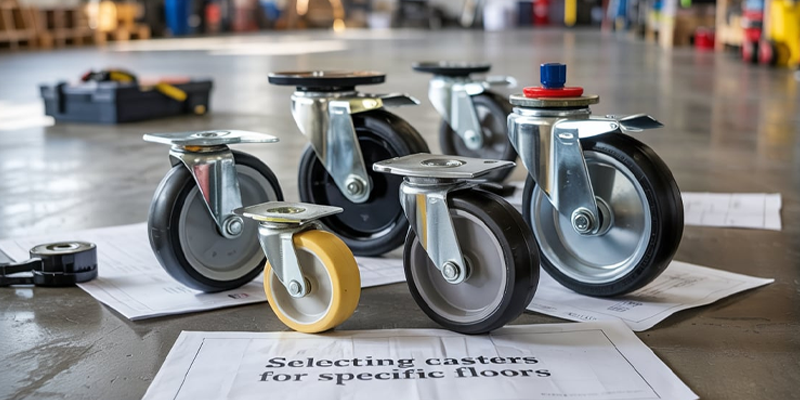
Concrete Floors
Casters for concrete floors need to handle abrasiveness, bumps, and debris. Durability is more important than softness. These are often used in warehouses, industrial facilities, and garages.
Best Materials:
- Nylon
- Phenolic
- Forged steel
Ideal Wheel Diameter:
- 4 inches or larger for smoother navigation over uneven surfaces
Tips:
- Use sealed bearings to keep dust and debris out
- Choose wider wheels for stability
- Avoid rubber or soft treads that wear out quickly
Hardwood Floors
Caster wheels for hardwood floors must protect the floor while ensuring quiet operation. Hardwood is vulnerable to damage from sharp edges or hard wheels.
Best Materials:
- Polyurethane
- Thermoplastic rubber
- Soft rubber
Features to Look For:
- Non-marking wheels to avoid streaks
- Rounded edges for better weight distribution
- Swivel casters with locking brakes for safety
Tips:
- Avoid metal and hard plastic wheels
- Regularly clean wheels to prevent dirt buildup
- Choose wide treads to minimize floor indentation
Tile and Epoxy Floors
These surfaces are sleek and sometimes fragile. Tile can crack under pressure; epoxy may scuff from hard wheels.
Best Materials:
- Polyurethane
- Thermoplastic
- Soft rubber
Wheel Features:
- Non-marking caster wheels to maintain a clean look
- Non-slip casters to enhance safety
- High shock absorption to reduce tile impact
Mounting Tips:
- Use top plate mounts for a secure connection
- Stainless steel forks resist corrosion from frequent cleaning
Carpeted Surfaces
Soft surfaces add resistance, especially if the pile is thick. You'll need caster wheels that can glide over without sinking.
Best Materials:
- Hard nylon
- Polyurethane
- Hard plastic blends
Design Considerations:
- Wheels should be at least 4 inches in diameter
- Flat or wide treads reduce resistance
- Avoid rubber wheels, which can stick to fibers
Comparison:
- Carpet vs hard floor casters differ significantly—hard floor casters focus on protection and smooth rolling, while carpet casters prioritize lift and ease of movement.
Practical Selection Tips
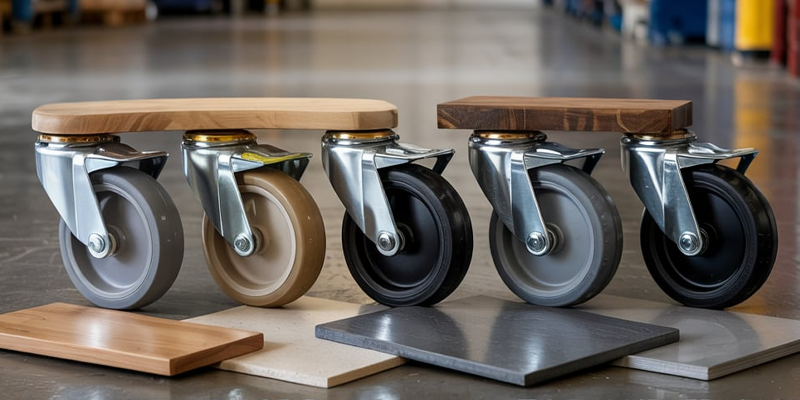
Choosing the best caster wheels involves more than just the floor type. Here's what else to consider:
- Load Capacity
Each caster has a weight limit. Total load = equipment weight + max content weight. Divide by the number of casters to get the per-caster load requirement. - Environment
Will the caster face water, oil, chemicals, or extreme temperatures? Polyurethane and phenolic offer excellent chemical resistance. - Swivel vs Rigid
Use swivel casters for flexibility in tight spaces. Combine with rigid casters for straight tracking. - Mount Type
- Top plate: More secure for industrial use
- Threaded stem: Easy to install on chairs or light carts
- Expanding adapter: Fits into tubular legs
- Noise and Vibration
Rubber and thermoplastic wheels are quieter, making them ideal for offices, hospitals, and retail spaces.
Maintenance and Longevity
Cleaning and Inspection
Routine checks prevent early wear and safety issues:
- Remove string, debris, and dirt from wheel treads
- Inspect for cracks or signs of flattening
- Tighten mounting hardware as needed
Lubrication Tips
- Apply grease or oil to swivel bearings and axles monthly in high-use areas
- Avoid over-lubricating, which can attract dust
Signs It's Time to Replace Casters
- Reduced mobility or resistance when pushing
- Visible wear or cracking
- Wheels wobble or fall off track
- Equipment vibrates or shifts unexpectedly
Swap in replacement caster wheels before failure causes floor or equipment damage.
Quick Reference & Comparison Tables
Table 1: Floor Type vs Wheel Material
| Floor Type | Recommended Wheel Material |
| Concrete | Phenolic, Nylon, Forged Steel |
| Hardwood | Polyurethane, Soft Rubber |
| Tile / Epoxy | Thermoplastic, Polyurethane |
| Carpet | Nylon, Polyurethane |
Table 2: Load Capacity vs Wheel Diameter
| Load (per caster) | Wheel Diameter | Floor Type |
| Under 150 lbs | 2–3 inches | Tile, Wood |
| 150–500 lbs | 4–5 inches | Carpet, Concrete |
| 500+ lbs | 6+ inches | Concrete, Epoxy |
Expert Tips for Maximum Performance
- Always match caster size and material to floor type
- Use non-marking caster wheels on finished floors
- Install non-slip casters in slick environments
- Never mix old and new casters
- Replace all wheels together for consistent performance
- Store idle carts on flat surfaces to avoid flat spots
FAQs
1. What are the most common types of casters?
The most common types are swivel and rigid casters. Swivel casters rotate 360 degrees for flexible movement, while rigid casters roll in a straight line. Many carts and equipment use a combination of both for better control and maneuverability. Your application will determine which style—or combination—is most effective.
2. Which caster wheels are best for hardwood floors?
For hardwood floors, use soft, non-marking wheels made of polyurethane, rubber, or thermoplastic. These materials reduce noise and prevent scratches or dents. Look for wide treads to distribute weight evenly. Avoid hard plastic or metal wheels that can damage the floor finish.
3. How do I choose casters for carpet vs hard floors?
Carpeted floors need larger-diameter, harder wheels, like nylon, to prevent sinking into the fibers. Hard floors require softer, non-marking wheels like rubber or polyurethane to protect against scratches. Always match the wheel material to the surface type. Using the wrong caster can reduce mobility or damage the flooring.
4. What are non-marking caster wheels, and why should I use them?
Non-marking caster wheels are designed to roll without leaving black streaks or scuffs. They're ideal for clean, polished surfaces like hardwood, tile, and epoxy. These wheels are typically made from gray rubber, polyurethane, or thermoplastic. Use them to maintain floor appearance and avoid permanent marks.
5. How do I prevent floor damage from casters?
Choose wheels designed for your floor type, especially non-marking or soft tread options for sensitive surfaces. Keep caster wheels clean and free from debris to avoid scratches. Distribute weight evenly and avoid exceeding the caster's load rating. Regular maintenance helps prevent early wear and floor damage.
6. When should caster wheels be replaced?
Replace casters if they show signs of wear, like cracks, flat spots, or noisy rolling. Difficulty steering or equipment vibration also indicates it's time for new wheels. Inspect the bearings and mounting hardware for looseness. Using replacement caster wheels early prevents damage to floors and equipment.
7. Which casters are best for heavy loads?
For heavy loads, choose high-capacity casters made from materials like phenolic casters, nylon, or forged steel. These wheels are built to support thousands of pounds without deforming. Make sure the caster size and mounting hardware match the weight requirements. Wider wheels help distribute load and improve stability.
8. Can I use the same casters on concrete and tile floors?
While some casters work on both, it's best to choose based on the floor type. Concrete requires durable wheels like nylon or phenolic, while tile benefits from non-marking, softer wheels like polyurethane. Using the wrong type may cause damage or reduce performance. A hybrid caster can work if transitions are frequent.
Wrapping Up
Floor compatibility is key when selecting caster wheels. Choosing the wrong caster can lead to damaged floors, reduced mobility, and costly repairs.
Understand your surface, weight demands, and mobility needs. Choose from reliable types of casters like rigid, swivel, or specialty wheels. Use non-marking caster wheels on delicate floors and maintain wheels regularly with inspections and replacement caster wheels.
For tailored caster recommendations, check out caster options at Atlanta Caster or contact our expert team. The right caster protects your floors, equipment, and your bottom line.