Email US
 Hours
Hours
 Visit Our Showroom


Reducing Downtime How the Right Casters Can Improve Production Efficiency
Jan 13th 2026
A steady line depends on smooth movement. If your carts drag, wheels fail, or turns take too long, small delays turn into lost hours. The fastest way to reduce downtime in manufacturing is to focus on mobility. The right caster solutions lower push force, protect floors, handle debris, and stay reliable under peak loads. That is how to improve production efficiency without rewriting your entire process. Match the wheel material to the floor, size the capacity to the true load, and select locks and bearings that suit your speed and duty cycle. Do this, and carts stop becoming bottlenecks. Your team spends less time fighting equipment and more time building products. In short, careful caster selection supports safer handling, faster changeovers, and fewer unexpected stops. The payoff is evident in increased throughput, reduced operator fatigue, and decreased maintenance hours.
Downtime at a Glance What It Costs and Why Mobility Matters
Unplanned stops typically arise from three areas equipment issues, material flow delays, and safety incidents. Carts and dollies touch all three. When wheels flat spot, bearings seize, or swivel sections wobble, take time slips, and buffers vanish. To reduce downtime in manufacturing, treat mobility as a core constraint, not an afterthought. Select equipment casters that match the specific job requirements. Capacity should reflect the heaviest expected load, including fixtures and bins. The wheel material should match the floor conditions and the travel distance. Bearings and swivel design should fit the speed and start stop frequency. Small choices add up to real efficiency improvement. Lower rolling resistance cuts push force and shortens moves. Reliable swivels track straight, then turn on command, which trims seconds at each station. Durable wheels shed debris instead of collecting it, so you avoid jams and floor damage. Well chosen caster solutions eliminate friction from everyday motion, ensuring schedules remain intact and output remains consistent.
Types of Casters and Where They Fit on the Floor
The following are the different types of caster wheels used for different types of floors
Rigid vs. Swivel vs. Total Lock
Rigid casters track straight and are suitable for long, simple runs. Swivel casters turn easily for tight work cells. Total lock designs secure both wheel and swivel to stabilize loading and unloading. Select mixes by route two rigid and two swivel for corridor moves, or four swivels with directional locks for flexible cells.
Wheel Materials (Poly, Rubber, Nylon, Urethane, Steel)
Polyurethane delivers low rolling resistance and protects finished floors. Rubber cushions light loads and uneven routes. Nylon resists chemicals and is suitable for use in wet areas. Steel wheels carry extreme loads on hard, smooth surfaces but need protected floors. Match material to load, speed, temperature, and debris profile to get the best casters and consistently high quality caster results.
Mounting Styles and Bearings (Plain, Roller, Ball, Precision)
Top plates distribute the load for stability, while stems support lighter carts. Plain bearings are simple for low speeds. Roller and ball bearings reduce push force for longer routes. Precision bearings are suited for higher speeds and frequent starts. Align the mount, bearing, and wheel to the cart’s duty to ensure reliable casters for equipment and durable industrial cart wheels for optimal performance.
Load, Floor, Speed, and Duty Cycle The Core Sizing Factors
Start with the true load per caster. Add the maximum product weight, container, fixtures, and a 10–20% safety buffer, then divide by the number of casters. If loads shift during motion, uprate again. Static loads look easier on paper, but the moment the cart rolls, dynamic forces spike. That’s why casters for heavy loads should be selected as high capacity casters rather than just meeting static math. For shock events, such as curbs, dock plates, and potholes, choose duty wheel casters with thicker forks and reinforced yokes.
Floor quality decides rolling resistance and wear. Smooth, sealed concrete rewards poly or urethane cracked joints and debris call for larger diameters and wider treads that bridge gaps and shed chips. If thresholds are unavoidable, use beveled ramps and increase wheel size to reduce impact.
Speed and distance add heat. Long pushes or tow lines generate a temperature rise in the tread and bearings. To prevent softening, chunking, or grease breakdown, pair the wheel compound with the route’s average speed and duty cycle. Precision or roller bearings cut push force on longer runs, while sealed options keep grit out. Finally, verify swivel offset and turning radius for the tightest corner you face; too little offset fights the operator, too much can shimmy at speed. Right sizing across load, floor, speed, and cycle delivers smooth travel without surprise failures.
Choosing the Right Casters for Common Use Cases
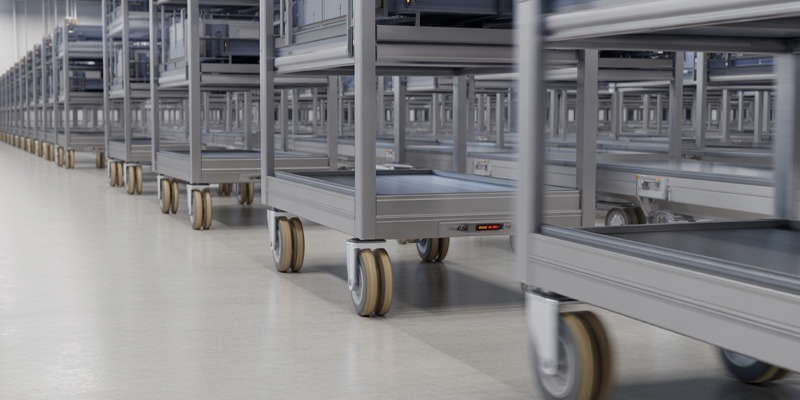
Here are factors to consider when choosing casters for various use cases
Line Side Carts and Tugger Trains
For quick stops and frequent pivots, pick low rolling resistance wheels with sealed bearings and directional locks on at least two corners. A 2 rigid/2 swivel mix works on corridors with four swivels with toe lock suit cells that change layout. Larger diameters pass joints with less force, keeping takt on pace. This setup keeps casters for carts light to push while protecting floors, and reliable industrial cart wheels help standardize motion from cell to cell. When balance matters, select the best casters with matching wheel hardness across the fleet to ensure predictable handling.
Machinery Moves and Heavy Fixtures
When relocating presses, molds, or assembly fixtures, size for the heaviest day you’ll ever see. Use casters for heavy loads with thick top plates, reinforced legs, and thru axle hardware. Pair heavy duty wheel casters with high capacity casters rated well above the calculated dynamic load, especially if you cross dock plates or tow. Add total lock or dual lock brakes for stable positioning during setup and leveling.
Yard, Dock, and Outdoor Transport
Outdoor routes punish small wheels. Choose large diameter treads that roll over gravel and expansion joints. The best casters for outdoor use resist moisture, UV, and grit sealed bearings are a must. Select Durable casters with corrosion resistant finishes and debris shedding profiles. For a long service life, use high quality casters with high grade urethane or rubber compounds that are matched to the temperatures of asphalt and concrete.
Custom Casters for Challenging Conditions
Standard parts don’t always match the job. Custom casters solve niche problems like chemical splash, washdown, or extreme temperatures. In corrosive areas, specify stainless steel rigs, sealed precision bearings, and wheel compounds that are tolerant to solvents or caustics. For ovens or freezers, use high temp grease and tread materials rated for the actual continuous temperature, not just short spikes.
Shock loads demand reinforced forks, oversized kingpins, and thicker top plates. Where noise limits apply, add softer treads, precision bearings, and damping washers to reduce rattle and floor hum. If static control is required, ESD safe or conductive wheel formulas drain charge without streaking. To prevent floor marks, choose non marking compounds and polished tread finishes. These Durable casters combine materials science with hardware choices axle spacing, spacers, and dust caps to keep grit out and rolling smoothly. The result is a set of high quality casters tailored to your route, environment, and force targets, ensuring the fleet operates consistently every shift.
How the Right Casters Cut Downtime in Manufacturing
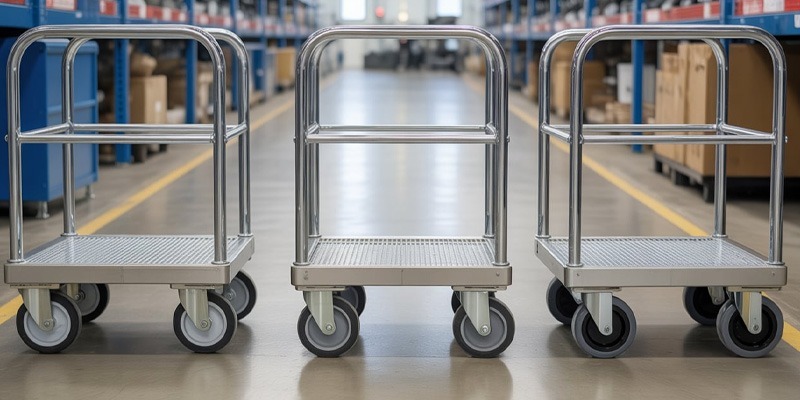
Here’s why choosing the right casters is important in the manufacturing industry to add to the productivity
Faster Startups and Changeovers
Reliable turning, total lock brakes that hold position, and standard wheel diameters across carts make setups quick and repeatable. Teams reach the line sooner, change tooling faster, and clear stations without the need for back and forth communication. That’s a direct way to reduce downtime in manufacturing and a practical path for reducing downtime in manufacturing without rewriting layouts.
Fewer Line Stops from Wheel/Swivel Failure
Right sized rigs, sealed bearings, and tread compounds matched to the route prevent seized swivels, flat spotting, and delamination. With Durable casters and high capacity casters, carts stay in service longer, PMs are predictable, and unplanned pulls from the line drop.
Lower Push Pull Force for Safer, Steadier Flow
Wheel diameter, hardness, and bearing choice determine the amount of effort required for operators to start, steer, and stop. Lower force reduces strain, speeds travel, and keeps takt steady. When equipment casters roll freely and track straight, stations receive parts on time, buffers stay healthy, and overall efficiency improvement shows up in throughput and fewer safety incidents.
Caster Maintenance Simple Habits That Extend Service Life
Here were different ways to extend the service life of any type of casters
Inspection Schedules and Wear Indicators
Set a weekly visual check and a monthly hands on inspection. Look for flat spots, chunking, cracks, and cone or cup wear on bearings. Check swivel play by rocking the rig excess wobble signals kingpin or raceway wear. Tag suspect wheels and swap them before they halt a shift.
Lubrication, Fasteners, and Replacement Intervals
Grease swivel raceways and wheel bearings on a cadence that matches your duty cycle and environment. Verify axle nuts, kingpin bolts, and mounting hardware with a torque checklist. Track replacements by hours in service, not just calendar time, so high use carts receive new parts before fatigue shows up on the floor.
Floor Care, Debris Control, and Threshold Ramps
Sweep routes daily, add debris mats at entries, and install beveled ramps at joints and dock plates. Clean up oil and cutting fluid quickly to protect wheel compounds. Clear, smooth pathways lower rolling resistance, reduce impact loads, and maintain consistent cart performance from station to station, which extends component life and keeps operators fresher.
Cost vs. Payback A Quick Snapshot for Decision Makers
Use a one page table to compare current casters to the proposed spec. Columns baseline, improved, and delta. Rows unplanned stops per month, average minutes lost per stop, maintenance hours per month, average push force at 400 lb load, and total cost in parts and labor. Add a row for minor injury claims tied to strain.
When higher grade wheels and sealed bearings are used, the savings usually outweigh the price gap within one to three quarters. Capture pilot results, then apply the same spec to similar routes. This keeps carts predictable, spares consolidated, and schedules steadier across shifts and buildings.
Spec Checklist You Can Use Today
- Load per caster (max product + container + fixtures + buffer ÷ number of casters)
- The wheel material matched the floor and chemicals.
- Bearing type (plain, roller, ball, precision) aligned to route length and speed
- Swivel radius and overall height clearances
- Mounting plate pattern and fastener grade
- Brake style (wheel, swivel, total lock)
- Floor condition and joint profile ramp needs
- Temperature range and washdown exposure
- Tow speed or push frequency (duty cycle)
- Noise limit and marking requirements (non marking, ESD, color)
Real World Scenarios
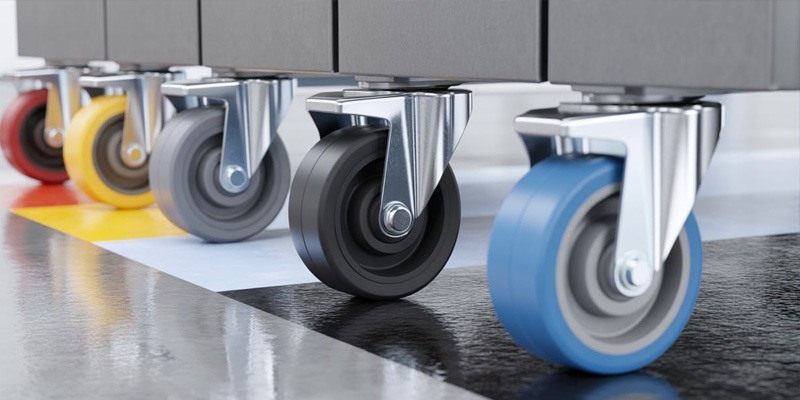
The following are a few ways caster wheels are useful for real world applications
Assembly Cell Carts on Polished Concrete
Select medium to large urethane wheels with sealed precision bearings for reduced start force and quiet operation. Pair four swivels with two directional locks for straight tracking between stations. A consistent wheel hardness across the fleet ensures that handling remains the same from cart to cart, which helps new operators learn routes quickly and safely.
Outdoor Yard Trailers over Asphalt and Gravel
Go larger in diameter with wide tread profiles that shed grit. Select corrosion resistant rigs and sealed bearings for use in weather conditions and during washdowns. Reinforced forks and thru axle hardware handle shock at dock plates. Specify non marking compounds suited to heat from sun warmed pavement so the wheels stay round during long, loaded waits.
Implementation Plan From Audit to Rollout
- Audit the fleet by documenting loads, routes, floors, speeds, and push pull forces.
- Sample and test trial two or three wheel compounds and bearing sets on a representative route.
- Set targets, cap start force and turning force define acceptable stop rates.
- Pilot one line runs for 30–60 days and log downtime, force, and repairs.
- Train teams show lock use, inspection points, and cleaning routines.
- Set the maintenance cadence grease, torque, and replacement intervals tied to duty cycle.
- Phase rollout standardizes SKUs and expands to similar cells, then to the building.
FAQs
1. What are the best options for heavy loads on uneven floors?
Select casters for heavy loads with large diameters, wide treads, and resilient wheel compounds that bridge gaps effectively. Pair reinforced forks and thick top plates with heavy duty wheel casters. For frequent impacts at thresholds, uprate capacity and use sealed bearings. When loads and shocks are both high, select high capacity casters with precision raceways for smoother tracking.
2. How often should we service casters to reduce downtime?
Set weekly visual checks and a monthly hands on inspection. Re grease swivel raceways and wheel bearings based on duty cycle and environment, not just the calendar. Torque fasteners quarterly or after any collision. Replace wheels when flat spots, cracks, or tread separation appear. Consistent caster maintenance prevents small issues from escalating into line stops, thereby helping to reduce downtime in manufacturing.
3. When should we consider custom casters?
Go custom when your route involves chemicals, washdown, extreme heat or cold, strict noise limits, static control needs, or delicate floors. Custom casters can specify stainless rigs, ESD safe wheels, high temp greases, and non marking compounds. If shock loads or unique footprints are unavoidable, tailored geometry and reinforced components deliver truly durable casters built for your environment.
Wrapping Up
Right sized wheels, sealed bearings, and thoughtful locking choices keep carts moving, cut strain, and lift throughput. When choosing the right casters today, start with a quick audit of loads, floors, speed, and duty cycle. Then, trial two or three specs on a representative route and measure push force, stops, and wear. Ready to move faster? Request a caster spec review or a sample kit. We will compare options, confirm the fit, and recommend a short pilot so you can see clear efficiency improvements before scaling the same caster solutions across your entire floor.