Email US
 Hours
Hours
 Visit Our Showroom


Casters for AGV- and Tugger-Towed Carts: What Changes When a Robot Pulls It
Oct 2nd 2026
When a robot pulls a cart, the cart’s casters must handle a very different workload than they did during manual operation. Automated carts experience longer duty cycles, repeated travel paths, loaded parking periods, and higher demands for consistent movement. The cart may look the same, but its caster requirements change because the operating conditions have changed.
Many automation projects focus on the AGV, AMR, or tugger itself. However, the carts being pulled behind these systems often determine whether the entire process runs smoothly. A caster selected for occasional manual movement may not deliver the tracking, durability, or repeatability needed for automated handling.
What Actually Changes When a Robot Pulls the Cart
The main difference is not the cart itself. It is the duty profile.
A manually moved cart benefits from human feedback. An operator can feel resistance, adjust direction around floor problems, notice unusual vibration, or remove a damaged cart before it causes an issue.
An automated cart does not receive that feedback. It follows programmed routes at consistent speeds and repeats the same movements across multiple shifts. This creates new demands for the casters, including:
- Longer operating hours
- More frequent starts and stops
- Extended periods sitting under load
- Greater need for predictable tracking
- Reduced tolerance for caster wear
Casters for AGV carts must be selected around these conditions rather than the original manual application. A caster that worked well when employees occasionally pushed a cart may not perform the same way when a tugger pulls it continuously.
No Operator Means No Early Warning
Automation removes one of the biggest advantages of manual material handling: immediate human feedback.
A worker pushing a cart may notice a stiff swivel, unusual rolling resistance, vibration, or a damaged wheel. They may naturally compensate by changing direction or reporting the problem.
An automated system continues following the same route.
This means small caster issues can become larger operational problems. A worn caster can affect cart movement, increase resistance, create uneven wear, or contribute to inconsistent positioning during automated processes.
For manufacturers using AGVs or tugger systems, caster problems that once appeared as minor handling complaints can become downtime concerns.
The Five Requirements That Change for Automated Carts
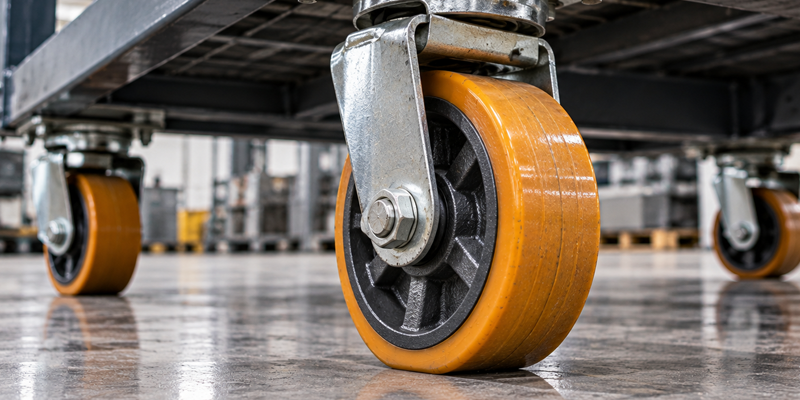
Automation does not require every cart to use the same caster design. Instead, it changes which performance factors deserve more attention.
1. Compression Set and Flat-Spotting
One of the major distinguishing factors between manual and automated cart use is how long carts remain parked while carrying a load.
Automated systems often place carts in staging areas, queues, or charging zones. These carts may remain stationary for hours while supporting the same weight in the same position.
This creates a risk known as compression set, in which the caster tread temporarily or permanently deforms under sustained pressure. Flat spots can develop, causing:
- Rough starts
- Increased rolling resistance
- Vibration
- Less predictable movement
Caster materials, tread design, and core construction all influence how well a caster handles extended parked loads. A material selected for floor protection in a manual environment may not always be the right choice for a continuously operating automated cart.
2. Duty Cycle and Heat
A caster used a few times each day experiences very different conditions from one operating through multiple shifts.
Continuous movement creates additional heat in the wheel tread, bearings, and internal components. Over time, this can accelerate wear if the caster is not selected for the application.
Important considerations include:
- Wheel material
- Core construction
- Bearing design
- Operating environment
- Maintenance schedule
Automated carts require casters that can handle repeated movement without frequent service interruptions.
3. Rolling Resistance and Battery Range
Rolling resistance affects more than how easy a cart is to move.
For battery-powered automation systems, resistance becomes an energy consideration. A cart that requires more force to move can increase the vehicle's workload and may affect operating cycles between charges.
Caster selection factors that influence rolling resistance include:
- Wheel diameter
- Tread material
- Bearing condition
- Load distribution
- Floor surface
Lower resistance can support smoother movement and help reduce unnecessary strain on automated equipment.
4. Tracking Precision During Automated Movement
Automated systems depend on repeatable movement.
Caster wear, tread deflection, or inconsistent rolling behavior can introduce variation in movement. While caster placement and steering configuration are separate design considerations, the caster itself still plays an important role in maintaining predictable cart behavior.
For automated cart trains, consistent caster performance helps support reliable movement along programmed paths.
5. Side Loading and Coupling Forces
Manual carts are usually moved with gradual changes in direction. Automated systems may create different forces during turns, acceleration, and coupling.
When carts are connected in a train, the casters experience additional side forces that may not appear during normal pushing.
Caster construction, swivel design, and mounting strength become important factors when handling repeated automated movement.
Casters on the Robot vs. Casters on the Cart
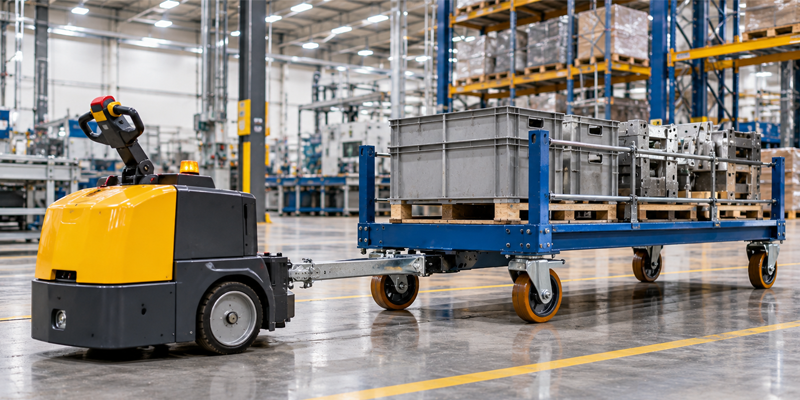
A common misunderstanding in automation projects is assuming that the AGV supplier handles all wheel-related decisions.
The AGV or AMR has its own drive and support components selected by the vehicle manufacturer. Those components are part of the vehicle system.
The cart being pulled is different.
In many facilities, the cart fleet already existed before automation was introduced. Those carts were originally designed around human movement, walking speeds, and operator feedback.
The cart owner usually controls caster selection for those carts. This makes caster evaluation an important part of automation planning.
The question is not only, “Can the robot move the cart?”
The more important question is, “Can the cart perform reliably under automated conditions?”
What to Change on a Cart You Are Automating
When converting existing carts for automation, review the caster specifications rather than assuming the current setup will continue to work.
Key areas to review include:
|
Caster Consideration |
Why It Matters |
|---|---|
|
Tread material |
Affects wear, floor protection, and resistance |
|
Wheel core construction |
Helps handle continuous loading conditions |
|
Bearing type |
Supports repeated movement and maintenance needs |
|
Wheel diameter |
Influences rolling ease and obstacle handling |
|
Must account for continuous duty, not only maximum load |
|
|
Determines retrofit compatibility |
Common changes may include selecting a different wheel material, increasing load capacity margin, upgrading bearings, or changing the caster design based on the operating environment.
A proper review should consider the entire application, including load, route, speed, floor conditions, and operating hours.
Floor Condition Becomes a System Requirement
Floor conditions matter in every industrial environment, but automation makes them more noticeable.
A person pushing a cart may naturally avoid a damaged floor joint or adjust their movement around an obstacle. An automated cart follows the same programmed path repeatedly.
Over time, repeated travel over the same areas can increase wear on both the floor and caster components.
Manufacturers should consider:
- Expansion joints
- Surface transitions
- Floor damage
- Route consistency
- Maintenance schedules
A caster system and the operating environment work together. A good caster choice cannot completely overcome unsuitable floor conditions, but understanding the route helps create a better specification.
Common Mistakes When Automating Existing Carts
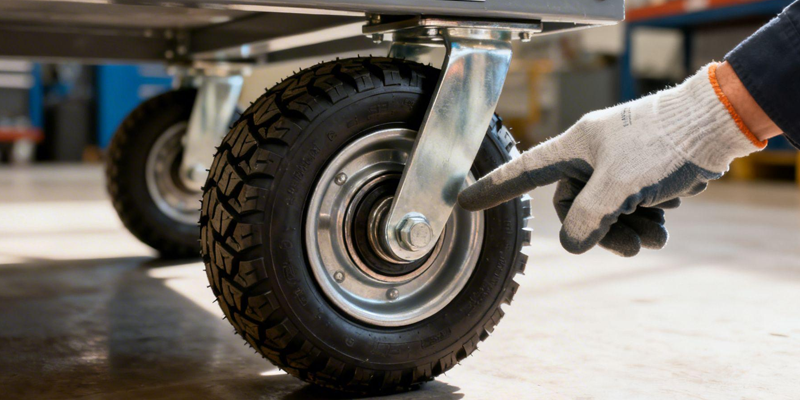
Several mistakes can create problems when adding automation to an existing cart fleet:
- Reusing the same caster specification designed for manual movement
- Choosing a wheel only based on maximum load capacity
- Ignoring parked loads during automated queues
- Assuming the AGV supplier selected the cart casters
- Overlooking continuous operating conditions
- Treating caster flutter or vibration as a minor issue
Automation changes the way carts are used. The caster selection process should change with it.
Maintenance and Monitoring for Automated Carts
Automation reduces human interaction with carts, making scheduled inspections more important.
Maintenance teams should regularly check for:
- Flat spots on wheel treads
- Uneven wear patterns
- Swivel stiffness
- Bearing noise
- Changes in cart tracking
Replacing worn casters in matched sets can help maintain consistent cart height and movement.
A preventive inspection schedule helps identify issues before they interrupt automated operations.
Frequently Asked Questions
1. Do AGV-pulled carts need different casters than manually pushed carts?
Yes. Automated carts experience longer operating hours, repeated routes, and parked loads that manually moved carts usually do not.
2. What causes flat spots on carts that sit in an AGV queue?
Extended stationary loads can compress caster tread materials and create flat areas that affect movement.
3. Does caster choice affect an AGV’s battery life?
Yes. Rolling resistance affects the force an automated system needs to move a cart.
4. Which wheel material works best for continuously operating automated carts?
The right material depends on load, floor conditions, duty cycle, and operating requirements.
5. Are kingpinless casters better for automated carts?
They can be suitable for applications requiring strong swivel performance and durability, depending on the operating conditions.
6. How does caster wear affect automated docking accuracy?
Caster wear can change movement consistency and contribute to tracking variation.
7. Can existing carts be retrofitted for automation?
Many existing carts can be updated with the right caster specification after reviewing the application requirements.
8. How often should automated cart casters be inspected?
Inspection frequency depends on usage, environment, load, and operating schedule.
Wrapping up
The carts behind an AGV or tugger are a critical part of the automation process. While the robot provides movement, the casters determine how reliably the cart performs over time.
Updating caster specifications for duty cycle, parked loads, rolling resistance, and operating conditions can help existing carts perform better in automated environments.
Atlanta Caster & Equipment, Inc. has provided caster solutions from Tucker, GA, since 1982. Our Certified Caster Specialists can help review your cart application, recommend suitable configurations, and support automation projects with the right mobility components.
Send us your cart type, load details, route information, and operating conditions for an application review.