Email US
 Hours
Hours
 Visit Our Showroom



How E-Commerce Fulfillment Centers Can Reduce Travel Time with Better Mobility Systems
Jul 8th 2026
E-commerce fulfillment centers are under pressure to ship orders faster, manage labor costs, and keep teams moving without creating bottlenecks. While many facilities look first at software, automation, or layout redesigns, travel time often starts with the basics- how people, carts, and products move through the building.
In many fulfillment centers, employee travel time represents one of the largest sources of non-value-added labor. Workers may spend minutes walking between pick zones, pushing overloaded carts, turning through narrow aisles, or waiting for blocked pathways to clear. Over hundreds or thousands of daily trips, those small delays weaken warehouse productivity, reduce warehouse efficiency, and slow distribution center operations.
Better mobility systems can help. The right material handling equipment, cart design, wheel selection, and movement layout can reduce wasted steps before a facility commits to costly automation.
Why Travel Time Is One of the Biggest Barriers to Warehouse Productivity
Travel time is the amount of labor spent moving people or products rather than completing value-added fulfillment tasks. In a fulfillment center, value is created when orders are picked, packed, staged, replenished, or shipped. Walking long distances, pushing heavy carts, searching for equipment, and navigating congestion all add labor without bringing the order any closer to completion.
This matters because warehouse productivity depends on how much work each team member can complete during a shift. If workers spend too much time traveling, fewer orders are picked per hour. If carts are hard to steer, trips take longer. If aisles are blocked by poor equipment flow, pickers lose time even when the order management system is working correctly.
Travel waste is often hidden because it feels normal. A worker who walks across the facility for each batch may seem busy, but much of that movement may not add value. Over time, this affects labor planning, fulfillment speed, and cost per order.
Improving warehouse productivity does not always require a major building redesign. Many fulfillment centers can recover time by reviewing travel paths, cart use, staging points, replenishment routines, and the condition of warehouse carts. Atlanta Caster helps facilities evaluate movement problems tied to wheels, cart handling, load capacity, and floor conditions so travel time can be reduced at the equipment level.
The Hidden Relationship Between Mobility Systems and Warehouse Efficiency
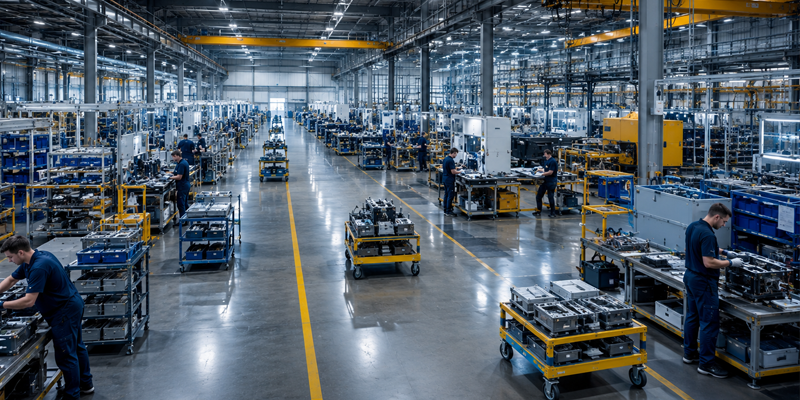
Mobility systems influence how quickly products move from storage to packing, from receiving to staging, and from replenishment to active pick areas. A mobility system includes the carts, racks, trolleys, wheels, handles, floor routes, and staging methods used to move goods through the facility.
When the system works well, workers move with less effort, carts track cleanly, and products travel fewer unnecessary feet. When the system performs poorly, travel time increases. Carts may drag, wobble, pull to one side, or require extra force to turn. These issues reduce warehouse efficiency even if the facility has good software and trained staff.
The relationship is simple- easier movement supports faster work. Better mobility solutions can reduce friction between tasks, shorten trips, and make picking or replenishment less tiring. This is especially important in e-commerce, where order profiles can change daily, and workers may handle small parcels, mixed SKUs, bulk goods, returns, or replenishment totes during the same shift.
Warehouse carts and material-handling carts are often the most-used tools in the building. If they are poorly matched to the floor, load, or travel distance, workers pay the cost every time they push or pull them. Atlanta Caster supplies industrial casters for fulfillment, manufacturing, distribution, and storage environments where rolling performance directly affects daily movement.
How Better Cart Design Reduces Travel Time

Cart design can reduce travel time by making every trip easier to start, steer, stop, and unload. A well-designed cart fits the task, carries the right volume, moves through aisles without blocking traffic, and supports fast loading and unloading. A poor cart design slows the worker before the first item is picked.
Turning radius is one major factor. In narrow aisles or crowded pick zones, bulky carts may require extra repositioning. Better warehouse carts can turn with less effort, reducing small delays at aisle ends and packing station approaches. Warehouse trolleys can also be useful when the task requires frequent short trips, lighter loads, or movement through tight spaces.
Cart weight also matters. A heavy cart that is oversized for the task increases effort and slows acceleration. A cart that is too small may require more trips, which adds travel time.
Route planning and cart selection should work together. A facility may reduce walking time by batching orders, placing fast-moving products closer to pack stations, or using carts that support multi-order picking.
Atlanta Caster helps facilities connect cart design with wheel performance, so movement planning supports real gains in warehouse productivity.
Why Caster Performance Matters More Than Most Facilities Realize
The performance of industrial casters directly affects how easily workers can move loads through a facility. A cart may look simple, but its wheels determine push force, steering control, vibration, noise, floor protection, and load stability.
Rolling resistance is the first issue. If a cart needs too much force to start moving, workers slow down on every trip. If the wheels do not roll smoothly under weight, the cart becomes harder to control. Poor rolling performance can make short routes feel longer and increase fatigue across the shift.
Floor conditions are another factor. Fulfillment centers often include polished concrete, expansion joints, dock plates, ramps, debris, and floor transitions. The wrong wheel can catch, chatter, or transmit vibration into the cart. Over time, repeated shock impact can affect both workers and the goods being moved.
Caster size also matters. Larger wheels often roll more easily over small obstacles and floor joints, while smaller wheels may support a lower cart height or fit in tight spaces. The correct caster size depends on cart design, load weight, turning needs, floor condition, and travel distance.
Load capacity must be reviewed carefully. Each caster should be rated to support the expected load with a safety margin. Facilities should account for uneven loading, sudden stops, ramps, and daily wear. Wheel casters for carts that are under-rated for the job can fail early and create safety risks.
Ergonomics, Worker Fatigue, and Fulfillment Speed
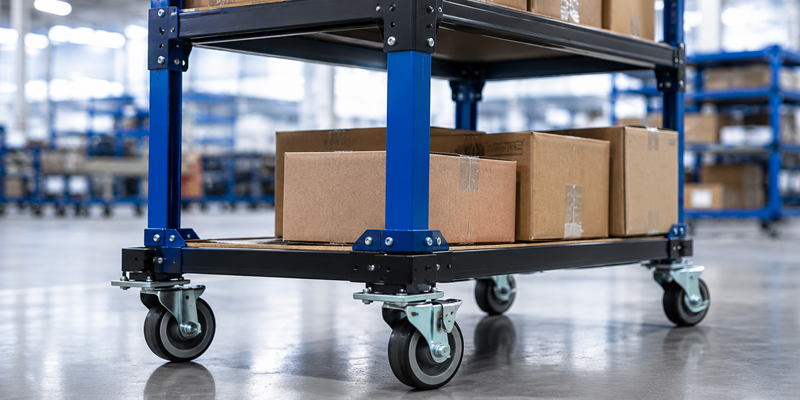
Warehouse ergonomics is directly connected to fulfillment speed. When workers push carts that are hard to start, difficult to steer, or unstable under load, fatigue builds quickly. Tired workers move more slowly, make more handling errors, and may need more recovery time during a shift.
Push and pull forces should be part of every cart review. A cart that works well empty may become difficult to move when fully loaded. Workers may lean into the cart, twist their wrists, or overuse their shoulders and backs just to keep the equipment moving. These small strain points can affect safety and warehouse productivity.
Better mobility solutions can reduce force, improve control, and make repeated trips less tiring. Wheel material, bearing condition, handle height, cart balance, and turning layout all affect how the worker experiences the equipment. An efficient cart should not fight the person using it.
Improving warehouse ergonomics also supports consistency. When carts move smoothly, workers can maintain a steadier pace across the shift.
Evaluating Mobility Systems for High-Volume Fulfillment Operations

High-volume fulfillment centers should evaluate mobility systems using a practical decision framework. The first factor is load weight. Teams should identify the average and maximum weight moved on each cart type. Load capacity should be calculated using the full cart weight, product weight, and a safety margin.
The second factor is travel distance. Carts used for long routes need easier rolling and stronger components than carts used for short trips near a workstation. Long travel paths increase the cost of poor wheels because every extra pound of pushing force is repeated throughout the day.
The third factor is floor surface. Smooth concrete, ramps, dock areas, floor joints, and debris each create different demands. Industrial casters must match these conditions. The fourth factor is facility layout. Narrow aisles, tight corners, elevators, packing lines, and staging lanes all affect whether swivel, rigid, or mixed caster layouts work better.
Facilities should also compare Types of casters by how they support movement, not just by name. Swivel casters help carts turn. Rigid casters support straight tracking. Brakes improve parking control. Wheel material affects grip, noise, floor protection, and durability.
Atlanta Caster helps fulfillment teams review material-handling equipment, cart movement, caster size, and wheel material to ensure mobility upgrades support real operating needs.
Measuring the ROI of Mobility Improvements
Mobility improvements should be measured in labor time, throughput, safety, and equipment life. A simple ROI formula is-
Minutes saved per trip × trips per day × labor rate = estimated labor value recovered.
For example, if a facility saves 30 seconds per cart trip and completes 600 trips per day, that equals 300 minutes saved daily. That is 5 labor hours per day. If the loaded labor rate is $24 per hour, the facility recovers about $120 in labor value per day. Over 250 operating days, that equals $30,000 in annual labor value.
This type of calculation helps leaders connect mobility solutions to measurable results. The numbers become even stronger when better movement also reduces damaged goods, worker strain, cart maintenance, and missed shipping targets.
An efficient cart and an inefficient cart may look similar at first glance, but the labor difference grows with every trip. A cart that rolls easily through aisles helps workers pick, replenish, and stage orders faster. A cart that drags or shakes adds friction to every task.
Facilities evaluating casters for sale should consider total operating cost, not just purchase price. Atlanta Caster supports this review by helping buyers connect caster selection with warehouse efficiency, safety, and long-term cart performance.
Frequently Asked Questions
1. How does travel time affect warehouse productivity?
Travel time reduces warehouse productivity because workers spend time moving instead of picking, packing, replenishing, or staging orders. Long walking paths, poor cart flow, and hard-to-move equipment reduce labor use and slow throughput. Reducing travel time helps more work get completed during each shift without adding extra staff.
2. What mobility system improvements can reduce travel time in fulfillment centers?
Fulfillment centers can reduce travel time by improving cart design, placing supplies closer to work areas, reviewing pick paths, removing aisle congestion, and upgrading wheels on high-use carts. Better warehouse carts, material-handling carts, and route planning can reduce wasted movement without relying solely on automation.
3. Why do industrial casters matter in warehouse operations?
Industrial casters matter because they affect how easily carts move under load. Poor casters increase rolling resistance, cause steering problems, lead to vibration and noise, and increase worker fatigue. Better casters can improve cart control, protect floors, support safe movement, and help teams move products faster through fulfillment and storage areas.
4. How do caster size and load capacity influence cart performance?
Caster size affects rolling ease, cart height, and obstacle clearance. Load capacity determines whether the caster can safely support the combined weight of the equipment and product. If the caster is too small or under-rated, carts can become hard to push, unstable, or prone to early failure under daily use.
5. What causes carts to become difficult to push?
Carts often become difficult to push because of worn wheels, damaged bearings, poor-quality wheel material, overloading, rough floors, or repeated shock impacts. Dirt, debris, and poor maintenance can also increase rolling resistance. Regular inspection and proper caster selection help carts move more smoothly.
6. How can warehouse ergonomics improve fulfillment performance?
Warehouse ergonomics can improve fulfillment performance by reducing worker fatigue, strain, and the risk of injury. Carts that move with less force help workers maintain a steady pace during picking, replenishment, and staging. Better ergonomics supports safer movement and stronger productivity in the warehouse across long shifts.
7. What should fulfillment centers consider when selecting wheel casters for carts?
When selecting wheel casters for carts, facilities should review load weight, travel distance, floor conditions, turning needs, noise limits, and maintenance expectations. Casters for carts should match the work environment and duty cycle. The right wheel supports smoother travel, better control, and longer equipment service life.
8. How can facilities calculate the ROI of mobility system upgrades?
Facilities can calculate ROI by multiplying minutes saved per trip by trips per day and labor rate. For example, saving one minute across 300 trips equals 300 minutes, or 5 hours, saved per day. Add reduced fatigue, fewer cart repairs, and better order flow to estimate full value.
Wrapping Up
Improving warehouse productivity starts with reducing wasted movement. In e-commerce fulfillment centers, every trip, turn, cart push, and aisle delay affects labor use and order speed. Better mobility systems help teams move products with less effort, fewer bottlenecks, and better control.
Facilities do not always need to start with expensive automation. Reviewing material handling equipment, warehouse carts, warehouse trolleys, wheel condition, load capacity, and caster size can reveal practical ways to improve warehouse efficiency. Even smaller changes can add up when repeated across hundreds of daily trips.
Atlanta Caster helps fulfillment and distribution teams evaluate industrial casters, cart movement, and facility mobility needs. For teams comparing casters for tables, carts, racks, or workstations, the right caster choice can reduce travel time, protect workers, and support better distribution center operations.