Email US
 Hours
Hours
 Visit Our Showroom


How Industrial Casters Contribute to OSHA Workplace Safety Goals
Jul 22nd 2026
Industrial environments depend on the safe movement of tools, materials, and equipment every day. From warehouses and distribution centers to manufacturing plants and processing facilities, poor equipment mobility can create unnecessary risks for employees. While workplace safety programs often focus on training, protective equipment, and operating procedures, the role of industrial casters is sometimes overlooked.
Industrial casters are more than simple mobility components. The right caster selection can help reduce manual handling risks, improve equipment control, support safer material movement, and reduce strain on workers. For businesses focused on OSHA workplace safety goals, choosing the right industrial caster wheels for carts, machinery, and material-handling equipment is an important part of creating safer work environments.
Understanding how caster design, wheel materials, load capacity, and maintenance practices affect workplace safety helps facility managers make better decisions that support both employee protection and daily operations.
Understanding OSHA Workplace Safety Requirements
OSHA workplace safety guidelines focus on reducing hazards that can lead to injuries, including risks associated with material handling, equipment movement, and workplace conditions. Employers are responsible for identifying hazards, maintaining safe working environments, and providing equipment that allows employees to perform tasks safely.
Material handling is a common area where safety concerns develop. Workers may move heavy loads, transport equipment across uneven surfaces, or repeatedly push and pull carts throughout a shift. When equipment is difficult to move or lacks proper controls, employees may experience increased physical strain and a greater risk of injury.
Important workplace safety considerations related to equipment mobility include:
- Proper handling of heavy loads
- Safe movement paths and clear walking areas
- Regular inspection of workplace equipment
- Reducing unnecessary physical strain
- Maintaining stable and controlled equipment movement
Industrial caster wheels contribute to these goals by enabling equipment to move with less force and greater control. Although using specific casters does not guarantee OSHA compliance, selecting suitable components supports safer material handling practices.
Why Equipment Mobility Plays a Critical Role in Industrial Safety
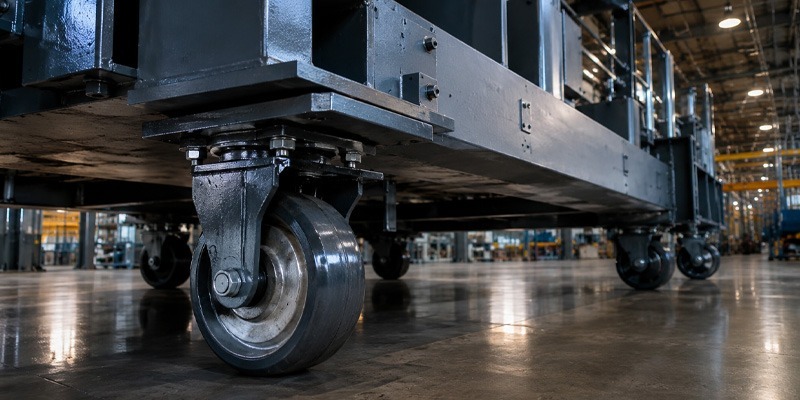
Equipment mobility directly affects how easily workers can move tools, products, and machinery. When carts or equipment require excessive pushing or pulling, employees may experience fatigue, discomfort, and increased physical stress.
Proper equipment mobility helps address several workplace challenges:
- Reducing excessive push and pull forces
- Improving operator control
- Limiting unnecessary physical effort
- Supporting smoother movement around facilities
- Reducing risks caused by unstable loads
For example, an industrial cart with poorly selected caster wheels may require more effort to move, especially when carrying heavy materials. Over time, repeated strain can contribute to worker discomfort and safety concerns.
The correct caster setup considers factors such as load weight, floor conditions, movement frequency, and turning requirements. This allows workers to move equipment with greater confidence while maintaining better control.
How Industrial Casters Improve Workplace Safety
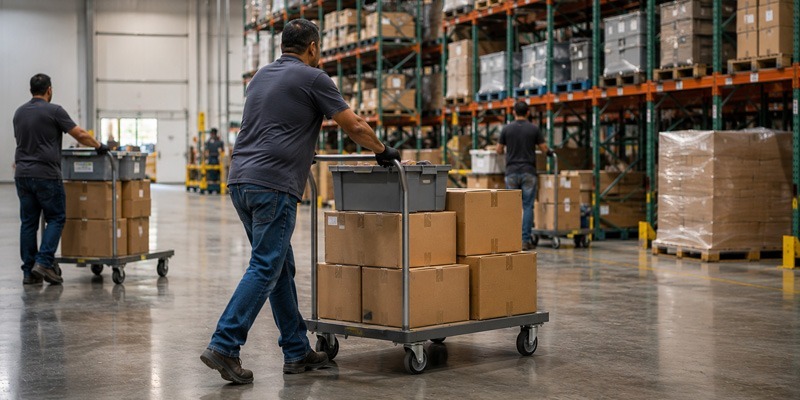
Industrial casters are wheel assemblies designed to support and move equipment safely while reducing manual effort, improving maneuverability, and enhancing workplace safety across industrial environments.
The right caster configuration can improve safety in several ways:
Better Maneuverability
Swivel casters allow equipment to change direction more easily, making them useful in tight spaces where workers need to navigate. Industrial carts, tool stations, and transport equipment often benefit from swivel designs, which allow smoother turns.
Reduced Manual Effort
Caster wheels with proper load ratings and suitable materials can reduce the force required to move equipment. This helps limit physical strain during repeated handling tasks.
Improved Equipment Stability
Safety casters and locking mechanisms help keep carts and equipment stable when stationary. This is especially important when workers load, unload, or operate equipment.
Better Control During Movement
Industrial wheels designed for specific applications help maintain predictable movement. This is important in manufacturing environments where uncontrolled equipment movement could create hazards.
Choosing the Right Types of Casters for Safer Operations
Different applications require different caster designs. Selecting the correct type of caster depends on load requirements, floor conditions, movement patterns, and safety needs.
|
Type of Caster |
Best For |
Advantages |
Limitations |
|
Swivel Casters |
Carts requiring frequent direction changes |
Easy maneuverability and tight turning |
May require braking systems for stability |
|
Rigid Casters |
Straight-line movement |
Strong directional control |
Limited turning ability |
|
Locking Casters |
Mobile equipment that must stay secure |
Helps prevent unwanted movement |
Requires proper brake maintenance |
|
Steel Casters |
Heavy industrial applications |
High load capacity and durability |
Can create more noise and may damage sensitive floors |
|
Polyurethane Casters |
Warehouses and manufacturing floors |
Lower noise, floor protection, smooth movement |
Not ideal for extreme temperature conditions |
|
Pneumatic Casters |
Uneven surfaces and outdoor use |
Shock absorption and vibration reduction |
Require inspection for air pressure and wear |
Understanding the different types of casters helps businesses choose safer solutions for their specific work environments.
Heavy Duty Casters for High-Capacity Equipment
Heavy-duty casters are designed for applications where standard caster wheels cannot safely support the required load. Industries that use large machinery, heavy equipment, and industrial carts often rely on casters for heavy equipment to move materials safely.
When selecting heavy-duty casters, consider:
- Total equipment weight
- Maximum load capacity
- Frequency of movement
- Floor conditions
- Required maneuverability
- Brake and locking requirements
Using a caster with an incorrect load rating can create safety risks. Overloaded caster wheels may experience premature wear, reduced control, or failure during operation.
Manufacturing facilities, warehouses, and distribution centers often use heavy-duty casters for equipment such as assembly carts, maintenance platforms, and transport systems.
Wheel Materials and Their Impact on Workplace Safety
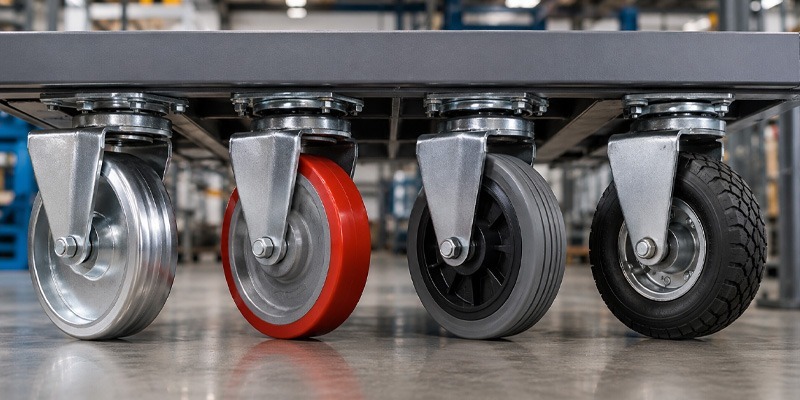
Caster wheel materials affect noise levels, vibration, floor protection, and movement control. Choosing the correct material helps match equipment performance with workplace conditions.
Steel Casters
Steel casters are commonly used for heavy industrial applications where high strength and load capacity are required.
Best for:
- Heavy machinery
- Industrial equipment
- High-load applications
Advantages:
- Supports heavy loads
- Handles demanding environments
- Provides long service life
Limitations:
- May produce more noise
- Can mark sensitive flooring
Polyurethane Casters
Polyurethane wheels are widely used in facilities where smooth movement and floor protection are priorities.
Best for:
- Manufacturing floors
- Warehouses
- Industrial carts
Advantages:
- Reduces vibration
- Protects floors
- Operates more quietly
Limitations:
- May not suit extreme conditions
Rubber and Pneumatic Wheels
Rubber and pneumatic wheels provide additional cushioning, making them useful where shock absorption is important.
Best for:
- Uneven surfaces
- Outdoor applications
- Equipment requiring vibration reduction
Advantages:
- Absorbs impact
- Improves operator comfort
Limitations:
- May require more maintenance
Reducing Shock Impact to Protect Workers and Equipment
Equipment movement can create vibration and impact forces, especially when carts travel over uneven floors or carry sensitive materials. Shock-absorbing casters and suitable wheel materials help reduce these effects.
Lower vibration levels can help:
- Protect transported products
- Reduce equipment stress
- Improve operator comfort
- Support longer equipment service life
In industries such as aerospace, electronics, and manufacturing, controlling vibration is especially important because transported materials may require additional protection.
Warehouse Safety Best Practices Using Industrial Casters
Warehouses rely heavily on material handling equipment to move inventory, tools, and supplies. Proper caster selection supports safer workflows in busy environments.
Common applications include:
- Picking carts
- Pallet carts
- Tool carts
- Distribution equipment
- Storage movement systems
Warehouse safety practices should include:
- Selecting caster wheels based on load requirements
- Keeping travel paths clear
- Inspecting wheels regularly
- Training employees on safe cart movement
- Avoiding overloaded equipment
Industrial carts with properly selected casters allow workers to move materials with better control and fewer physical demands.
Manufacturing Safety Through Proper Caster Selection
Manufacturing safety depends on the reliable movement of materials, tools, and equipment throughout production areas. Poor equipment mobility can slow operations and create avoidable hazards.
Proper caster selection supports:
- Safer movement of production equipment
- Better control of heavy loads
- Reduced manual handling concerns
- More predictable material flow
Manufacturers should consider caster performance as part of their overall equipment safety approach. The right industrial wheels help employees move equipment while maintaining control in demanding production environments.
Caster Inspection and Preventive Maintenance
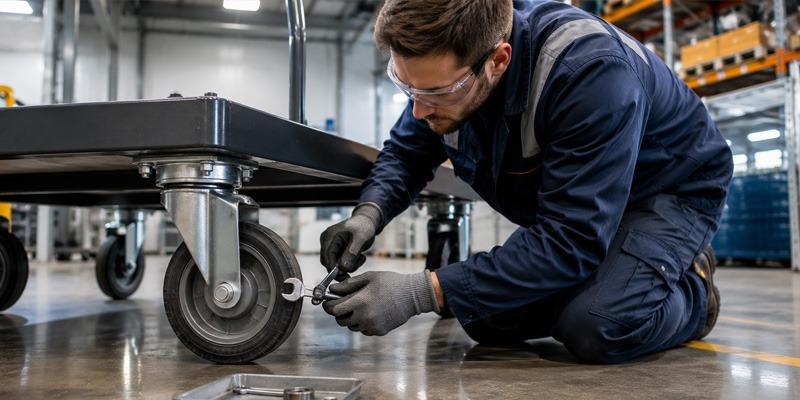
Regular caster maintenance helps identify problems before they become safety concerns.
A basic inspection checklist includes:
- Checking wheels for cracks, flat spots, or excessive wear
- Inspecting bearings for smooth operation
- Tightening loose fasteners
- Testing brakes and locking systems
- Confirming proper load support
- Replacing damaged components
Caster maintenance should be included in routine equipment inspections. Worn caster wheels can affect movement control and increase the chance of equipment-related incidents.
Common Mistakes That Increase Workplace Safety Risks
Incorrect caster selection or poor maintenance can create avoidable safety problems.
Common mistakes include:
- Choosing casters with insufficient load capacity
- Using incorrect wheel materials for floor conditions
- Ignoring worn or damaged wheels
- Overloading industrial carts
- Selecting the wrong swivel or rigid configuration
- Delaying caster maintenance
A careful review of equipment requirements helps prevent these issues and supports safer operations.
How Atlanta Caster Helps Businesses Improve Equipment Safety
Selecting the right caster solution requires understanding application requirements, load demands, and workplace conditions. Atlanta Caster provides a wide range of industrial casters, industrial wheels, and material-handling solutions for various industries.
With options such as heavy-duty, steel, and swivel casters, along with specialized wheel materials, businesses can select products based on their operational needs.
For safety managers, engineers, and purchasing teams, working with a knowledgeable caster supplier helps ensure equipment mobility decisions support workplace safety goals.
Frequently Asked Questions
1. How do industrial casters improve workplace safety?
Industrial casters improve workplace safety by making equipment easier to move, reducing manual effort, enhancing control, and supporting safer material-handling practices.
2. What OSHA workplace safety practices relate to caster wheels?
OSHA workplace safety practices related to caster wheels include proper material handling, equipment inspections, hazard identification, and risk reduction associated with moving loads.
3. What are the safest types of casters for industrial equipment?
The safest caster type depends on the application. Locking casters, heavy-duty casters, and properly rated swivel or rigid casters are commonly used when stability and load control are priorities.
4. When should heavy-duty casters be used?
Heavy-duty casters should be used when equipment or carts carry high loads that exceed the capacity of standard caster wheels.
5. How do swivel casters improve equipment mobility?
Swivel casters improve mobility by allowing carts and equipment to change direction more easily, especially in tight spaces.
6. Which wheel material provides the best shock absorption?
Rubber and pneumatic wheels generally provide stronger shock absorption, while polyurethane wheels offer a balance of smooth movement and floor protection.
7. Why is caster maintenance important for industrial safety?
Caster maintenance helps identify worn wheels, damaged bearings, and brake issues before they affect equipment control.
8. What load capacity should industrial caster wheels support?
Industrial caster wheels should support the total weight of the equipment, load, and any additional forces created during movement.
9. How often should caster wheels be inspected?
Inspection schedules depend on usage, environment, and load demands, but regular checks should be part of routine equipment maintenance.
10. How do industrial carts contribute to warehouse safety?
Industrial carts with properly selected casters help workers move materials with better control while reducing unnecessary physical strain.