Email US
 Hours
Hours
 Visit Our Showroom


Preparing an Existing Cart Fleet for Warehouse Automation
Oct 13th 2026
Warehouse automation projects often focus on the technology first: automated guided vehicles (AGVs), tugger systems, software, and workflow integration. However, many facilities find out a major challenge after implementation begins- the existing cart fleet was never prepared to operate in an automated environment.
A fleet that worked well with operators may not perform as well when connected to automated systems. Carts may need improved tracking, consistent specifications, better maintenance planning, and a clear conversion strategy before automation can run smoothly.
Preparing automation-ready carts starts with understanding what you already have. Instead of replacing every cart immediately, facilities can evaluate their current fleet, identify opportunities for improvement, and create a phased conversion plan.
Atlanta Caster helps manufacturers, warehouses, and industrial operations evaluate mobility requirements and develop caster solutions for automation projects. Since 1982, Atlanta Caster has supported businesses from Tucker, Georgia, with industrial caster expertise and custom solutions.
What Makes a Cart Automation-Ready?
An automation-ready cart can move predictably, remain stable during operation, handle repeated use, and perform consistently within an automated workflow. The goal is not simply adding automation equipment- it is ensuring the entire cart fleet supports the process.
Most existing fleets do not fail. Instead, they often have specific issues that prevent reliable automation, such as inconsistent caster specifications, different cart designs, worn components, or unknown maintenance histories.
A cart fleet prepared for automation typically has:
- Consistent cart specifications
- Known caster and mounting details
- Reliable tracking performance
- Documented maintenance requirements
- A clear replacement or retrofit plan
Before making changes, facilities need a complete understanding of their current fleet.
Step 1: Audit What You Actually Have
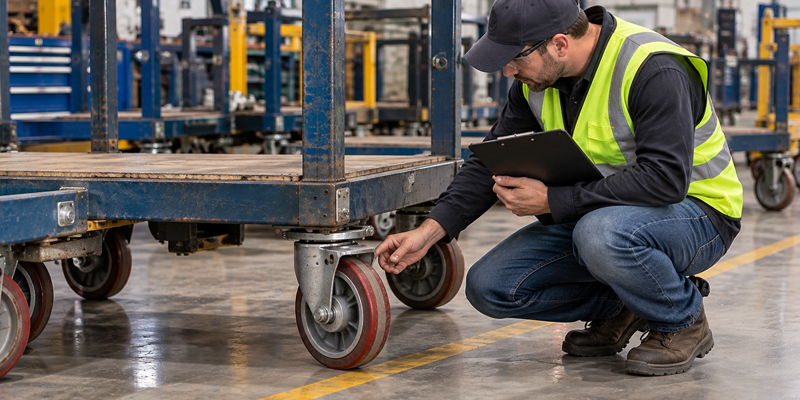
The first step in preparing carts for automation is creating a complete fleet inventory. Many facilities have more variation than expected because carts are repaired, modified, or replaced over many years.
Start by organizing carts into families rather than reviewing each cart individually. Similar carts often share the same frame design, caster configuration, and operating purpose.
A fleet audit should capture:
|
Audit Area |
Information to Record |
|---|---|
|
Cart family |
Model, frame type, and common design features |
|
Caster information |
Current caster type, size, and specifications |
|
Mounting details |
Mount type, dimensions, and compatibility |
|
Age and condition |
Cart age, wear concerns, and repair history |
|
Application |
Route, frequency of use, and operating environment |
|
Typical load |
Expected working conditions |
Photos of mounting areas and caster setups can also help identify differences between carts that appear identical.
The purpose of an audit is not to decide immediately what needs replacement. It creates a reliable starting point for making better fleet decisions.
Step 2: Score Each Cart Family
After collecting fleet information, the next step is prioritization. Not every cart requires the same level of attention, and converting the entire fleet at once may not be necessary.
A scoring system helps identify which cart families are ready for automation and which require changes first.
Evaluate each cart family based on:
|
Evaluation Criteria |
Questions to Consider |
|---|---|
|
Current condition |
Is the cart structurally sound? |
|
Automation use |
Will it operate behind a tugger or an automated system? |
|
Duty cycle |
How frequently will it run? |
|
Can it support the expected workload? |
|
|
Mount compatibility |
Can required caster changes be installed? |
|
Current movement |
Does the cart already move consistently? |
Based on the results, carts can be placed into four groups:
Keep
Carts that already meet operational requirements and require minimal changes.
Retrofit
Carts with a strong frame and a suitable design that can be updated for automation use.
Replace
Carts where the existing structure or design prevents reliable automation performance.
Retire
Older carts where conversion costs exceed the value of continued use.
This approach allows facilities to focus resources where they create the greatest improvement.
Step 3: Retrofit or Replace?
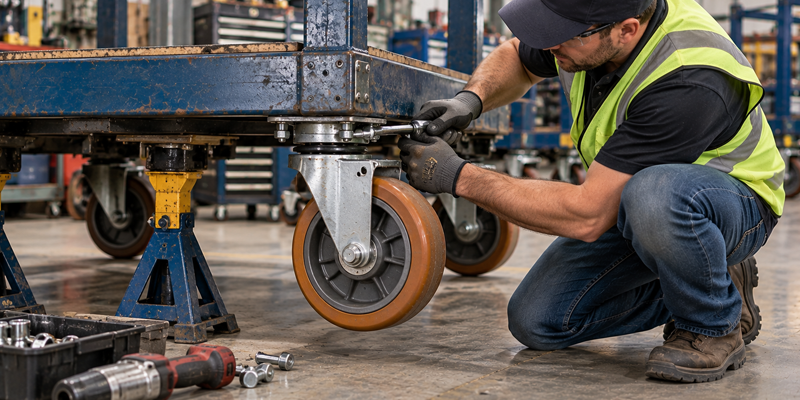
The decision between retrofitting and replacing depends on the cart's condition and design.
A retrofit makes sense when:
- The cart frame is in good condition
- The mounting setup supports the required changes
- The cart design already performs well on its intended route
- Updating components is practical
Replacement may be the better option when:
- The frame design limits consistent movement
- Mounting changes are not practical
- The cart was already unreliable before automation
- The cost of modifications approaches the cost of a new cart
The key question is not whether a cart can be modified. The question is whether the modified cart will perform reliably in the automated process.
Adding new components to a cart with an unsuitable design may create additional costs without solving the original problem.
A proper evaluation should consider the complete cart system before deciding on the next step.
Step 4: Standardize Before You Scale
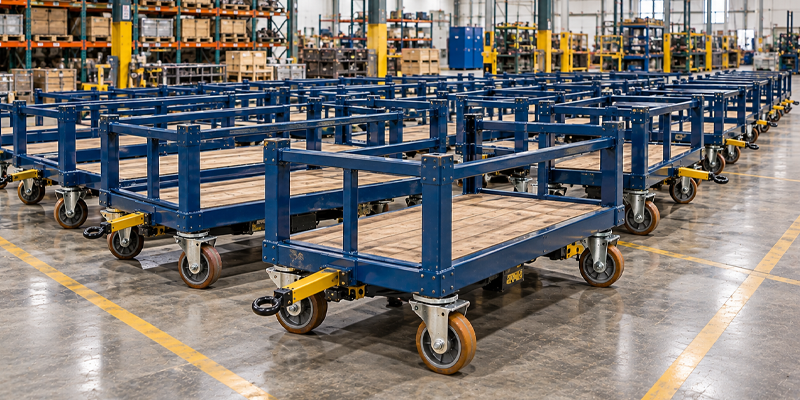
Standardization is one of the most important steps in preparing a fleet for automation.
Many facilities accumulate multiple carts and caster variations over time. Different replacement decisions, repairs, and upgrades can create a fleet with many different specifications.
This creates challenges for:
- Maintenance teams
- Spare parts management
- Future repairs
- Fleet expansion
A standardized fleet reduces unnecessary variation. Facilities should look for opportunities to:
- Reduce the number of caster variations
- Group similar cart families together
- Establish replacement standards
- Maintain appropriate spare parts
For example, managing a small number of approved caster configurations is generally easier than supporting dozens of different options across the same facility.
Standardization also makes future automation expansion easier because new carts can follow established specifications.
Step 5: Pilot, Measure, Then Roll Out
A full fleet conversion should not begin without testing.
A pilot program allows facilities to evaluate real operating conditions before making large-scale changes.
A successful pilot should include:
- Select a representative cart family
- Convert the carts according to the planned specification
- Run them through normal operating routes
- Measure performance results
- Adjust before expanding the program
Important measurements may include:
- Tracking consistency
- Docking performance
- Wear patterns
- Maintenance requirements
- Recovery events
Testing a smaller group first can reveal issues before they affect the entire fleet.
A pilot also establishes a documented process to guide future automation phases.
What Getting It Wrong Costs
Cart readiness is often a small part of a larger automation budget, but cart issues can affect the entire operation.
Common consequences of poor preparation include:
- Production interruptions caused by unreliable movement
- Extra maintenance caused by inconsistent specifications
- Fleet-wide rework after incorrect conversions
- Delays caused by unexpected compatibility issues
- Increased spare parts complexity
A structured preparation process helps reduce these risks by identifying problems before they become operational issues.
Common Mistakes When Preparing Carts for Automation
Assuming the Automation Supplier Covers the Entire Cart System
Automation equipment may be only one part of the solution. Existing carts still need evaluation.
Converting the Entire Fleet Immediately
A phased approach allows facilities to identify issues before making large investments.
Auditing Individual Carts Instead of Cart Families
Grouping similar carts creates a clearer view of fleet requirements.
Choosing Components Based Only on Price
The lowest upfront cost may create higher maintenance demands later.
Skipping a Pilot Program
Testing helps identify improvements before a full rollout.
Ignoring Route Conditions
Automated routes should be evaluated based on actual operating conditions.
Frequently Asked Questions
1. Can I use my existing carts with AGVs and tuggers?
Yes, many existing carts can be prepared for automation through evaluation and targeted updates. The condition, design, mounting setup, and intended operating requirements determine whether retrofit or replacement is the better option.
2. How do I know whether a cart needs new casters or a new frame?
A cart may need new casters when the frame is suitable, but mobility requirements have changed. A new frame may be needed when the current design prevents reliable tracking or automation performance.
3. How many carts should I convert in the first phase?
The first phase should include a representative group of carts that reflects actual operating conditions. A pilot allows facilities to measure performance before expanding changes across the full fleet.
4. What should I measure during a cart automation pilot?
Facilities should measure movement consistency, docking performance, wear, maintenance needs, and any operational interruptions during the pilot period.
5. How many caster SKUs should a standardized fleet have?
The right number depends on the fleet size and application requirements. The goal is to reduce unnecessary variation while maintaining the specifications needed for reliable operation.
6. Does the AGV supplier specify the casters on my carts?
Not always. Automation providers may focus on the vehicle or system integration, while the existing cart fleet may require separate evaluation and specification planning.
7. How long does a cart fleet conversion typically take?
The timeline depends on fleet size, cart condition, required changes, and testing requirements. A phased approach helps facilities manage the transition.
8. What spare caster stock should I hold once carts are automated?
Spare requirements depend on fleet size, operating frequency, and equipment specifications. Standardizing components can make spare parts planning easier.
Prepare Your Cart Fleet for Warehouse Automation
A successful automation project depends on more than the automated equipment itself. Existing carts need to be evaluated, organized, and prepared for the new operating environment.
The right process starts with an audit, followed by scoring, retrofit decisions, standardization, and pilot testing.
Atlanta Caster can help facilities review their cart fleet requirements, identify mobility challenges, and develop caster solutions for automation projects. Contact Atlanta Caster to discuss your fleet audit and preparation needs.