Email US
 Hours
Hours
 Visit Our Showroom



Why Your Carts Are Hard to Push (And How the Right Casters Fix It)
Apr 8th 2026
If your team is struggling with carts with casters that feel harder to push than they should, the problem usually is not the cart itself. In many cases, the real issue comes down to caster selection, poor load distribution, the wrong wheel material, or choosing a caster that does not match the floor and load conditions. This kind of problem slows movement, increases worker fatigue, and causes more wear on both carts and flooring over time. A cart that rolls poorly does not just feel inconvenient. It can affect safety, productivity, and replacement costs. The good news is that the right setup can help reduce friction, improve control, and make daily movement much smoother. This draft follows the problem-solution structure, audience focus, and keyword direction outlined in your brief.
The Real Reason Your Carts Are Hard to Push
When a cart becomes difficult to move, people often assume the wheels are simply old or worn out. Sometimes that is true, but the issue usually starts much earlier. Poor caster selection can create resistance even when the wheels are new. If the wrong caster type is installed, the cart may drag, wobble, resist turning, or require extra force to get moving.
Another common problem is uneven load distribution. When the weight is not spread correctly across the cart, some wheels carry more pressure than others. That imbalance makes rolling resistance worse and places extra strain on the caster frame, wheel, and bearing. Over time, this may lead to flat spots, early damage, and poor handling.
Floor conditions also matter. Smooth concrete, rough warehouse flooring, tile transitions, expansion joints, and debris all affect how a cart moves. A caster that works well in one environment may perform poorly in another. That is why caster selection should never be treated as a simple replacement decision. It should be based on how the cart is used, what it carries, and where it travels.
How Load Distribution Affects Movement
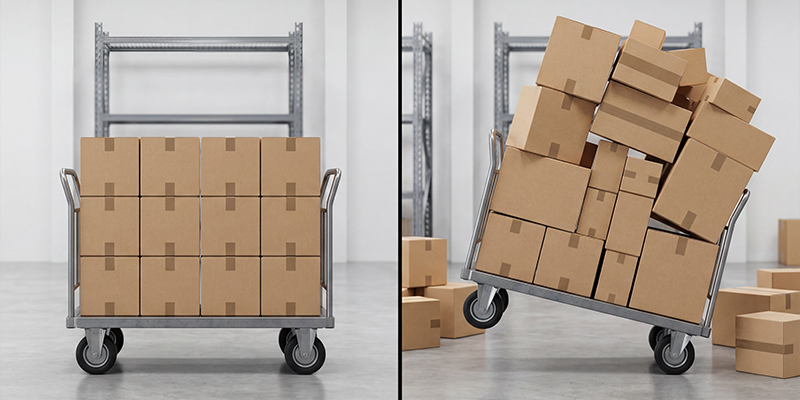
Good load distribution is one of the most overlooked parts of cart performance. Even a strong caster can perform badly if the weight above it is uneven. When the front of the cart is overloaded, steering becomes harder. When one side is overloaded, the cart may pull in one direction or create drag during turns.
This is where caster weight capacity becomes important. Every caster is designed to safely and consistently support a specific weight. If the actual load on one wheel is much higher than expected, the caster can compress more than intended, creating more friction and making the cart harder to move.
Uneven load distribution also causes problems during starting and stopping. A cart may feel manageable once it's rolling, but the initial push takes too much effort. That happens because overloaded wheels increase resistance at the point of movement. In busy facilities, this repeated strain can slow work and increase employee fatigue.
A better approach is to review how the cart is loaded in normal operation, not just its total rated load. The real question is not only how much the cart carries, but how that weight is spread across each caster.
Friction- The Hidden Problem Behind Poor Cart Mobility
Many operators notice the symptom before they know the cause. The cart feels heavy, stiff, or awkward to steer. What they are really dealing with is friction. If you want to reduce friction, you have to look beyond the wheel alone. You need to consider rolling resistance, floor contact, bearing quality, and wheel material.
Rolling resistance is the force that fights against movement. Softer wheels may protect floors and reduce noise, but they can also create more resistance depending on the load and surface. Harder wheels may roll more freely on smooth floors, yet they can struggle on rough surfaces or transmit more shock through the cart.
Wheel diameter also matters. Smaller wheels often need more push force to move over cracks, joints, or rough patches. Larger wheels usually help reduce friction because they roll over obstacles more easily. Bearing type matters too. Poor bearings increase drag and reduce steering responsiveness.
In many operations, the best way to reduce friction is to match the caster wheel material to the environment instead of defaulting to whatever was used before. A wheel that performs well in a hospital, warehouse, bakery, or industrial plant may be very different. That is why mobility problems should be diagnosed by application, not guesswork.
Caster Load Capacity and Why It Matters
Caster load capacity refers to the maximum weight a caster can support without affecting performance or safety. That definition is simple, but its real-world effect is significant. When a caster is overloaded, the wheel may deform, the bearing may wear more quickly, and the cart becomes harder to push and control.
Many buyers look only at the cart's total weight and divide it by 4. That gives a rough estimate, but it does not reflect real operating conditions. Loads shift. Floors are uneven. Turning forces add stress. Impacts from thresholds or rough surfaces can temporarily increase pressure on individual wheels. That is why caster load capacity should include a margin of safety.
If the selected caster is too light for the job, the result is more than a shorter product life. It also leads to worse handling. The cart may feel heavier during turns, less stable under load, and more resistant at startup. A proper review of caster load capacity helps prevent these issues before they become daily problems.
For facilities moving dense materials, equipment, or bulk products, this step is even more important. Underestimating load requirements often leads to repeated replacements, downtime, and frustration for the people who use the cart every day.
Types of Casters and Their Impact on Performance
Understanding the main types of casters helps explain why some carts move smoothly while others fight every turn. The most common comparison is between swivel and rigid designs. Swivel casters improve maneuverability, while rigid casters provide straight-line stability. Both have a place, but the wrong combination can make cart handling worse.
Rigid cart casters help a cart track forward in a straight path. They are useful when controlled linear movement is required. Swivel cart casters rotate, allowing the cart to turn and pivot more easily. However, if all casters swivel, a heavily loaded cart may become harder to control in long straight runs.
The wheel material also changes how these types of casters behave. Polyurethane, rubber, phenolic, and cast iron all perform differently under load and across different surfaces. Some materials help protect floors. Others support heavier weights or roll more easily on smooth concrete. Some are better for washdown or chemical exposure.
The best types of casters depend on the use case. A light service cart in a clean facility needs something very different from an industrial cart carrying heavy parts across a warehouse floor. That is why caster choice should always begin with the application.
Choosing the Right Casters for carts
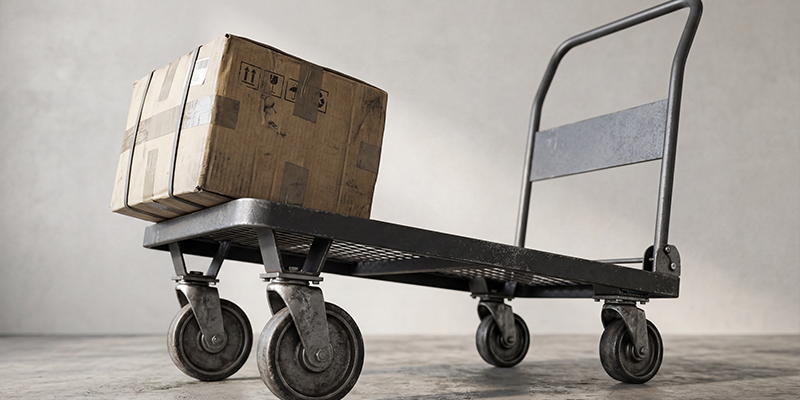
Choosing the right casters for carts starts with understanding the cart's actual job. A cart used for light office supplies does not need the same setup as one moving heavy tools, dense stock, or industrial equipment. Good caster selection goes beyond size or price. It considers load, floor surface, travel distance, turning requirements, and exposure to impact or moisture.
Start with capacity. Review total cart weight, expected payload, and how that weight shifts during use. Then check the caster load capacity and the caster weight capacity, including a safety margin. This prevents overload and helps the cart stay easier to move over time.
Next, consider the floor. Smooth, sealed concrete; rough concrete; tile; asphalt; and coated floors all interact differently with the wheel. If the goal is to reduce friction, wheel material and diameter matter a great deal. On rougher surfaces, a larger wheel often improves travel. On smooth floors, a firmer wheel may roll more freely.
Then think about maneuverability. Some casters for cart applications need tight turning in narrow aisles. Others need steady, straight movement over longer distances. That affects whether the cart should use swivel, rigid, or mixed caster configurations.
It is also important to match the cart to the environment. Noise limits, floor protection, washdown conditions, chemicals, heat, and debris all influence which casters for carts perform well. Good caster selection is really about matching the product to the operating conditions, not choosing the most common option.
For buyers replacing worn wheels, it is worth reviewing whether the original setup was correct in the first place. Many mobility problems continue because the same poor configuration is installed again and again. A better caster selection process can address the root issue rather than repeating it.
When You Need Heavy-Duty Casters
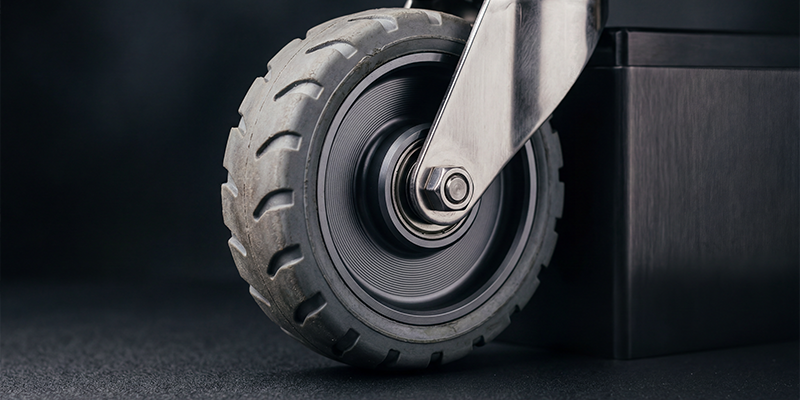
Not every application requires heavy-duty casters, but when loads are high or operating conditions are demanding, standard options may not last. Heavy-duty casters are designed for tougher environments where carts carry heavier loads, travel longer distances, or encounter harsher impacts.
These applications often involve industrial carts, platform trucks, production equipment, bulk material handling, and warehouse transport. In those cases, both frame strength and caster weight capacity matter. A wheel alone is not enough. The fork, bearing, mounting plate, and overall construction must be able to handle the load and the environment.
You may need heavy duty casters if carts are failing often, wheels are flattening, movement becomes harder as loads increase, or replacement cycles are too frequent. Repeated breakdowns usually point to a mismatch between the application and the caster design.
For demanding operations, heavy duty casters can improve reliability, reduce maintenance needs, and support safer cart movement. They are especially useful where carts encounter rough floors, thresholds, or high daily use.
Practical Fixes to Improve Cart Mobility
Once the causes are clear, the fixes become more straightforward. The first step is to check whether the existing wheels are appropriate for the actual load and floor. Many operators resort to lubrication or repeated repairs when the real issue is incorrect caster selection.
A practical way to reduce friction is to upgrade the wheel material or wheel size. Larger wheels often roll more easily over rough areas and transitions. Better bearings can also help reduce friction and improve steering response.
Next, review loading practices. Better load distribution can immediately improve mobility without changing the cart itself. If weight is placed evenly and the heaviest items are positioned correctly, the cart may feel noticeably easier to handle.
It also helps to review caster configuration. Switching from an all-swivel setup to a mixed swivel-rigid arrangement may improve tracking. In other cases, replacing worn or undersized cart casters with better-matched options can solve the issue.
The key is to address the primary cause, not just the symptom. When the wheel, load, and floor are properly aligned, the cart works with the operator rather than against them.
Wrapping Up
Hard-to-push carts are usually the result of a poor match between the load,the floor, and the wheel setup. Problems with caster selection, weak load distribution, and incorrect caster load capacity can all make a cart feel heavier and less controlled than it should. The right solution is to review how the cart is actually used, then match the caster to the application.
Whether the need is for standard cart casters, better casters for cart use, or more durable heavy-duty casters, the goal is the same- improve mobility, reduce strain, and support safer daily movement. Reducing rolling resistance by choosing the right wheel material can decrease push force by up to 50%, making a noticeable difference in real working conditions. Atlanta Caster offers a wide range of heavy-duty casters designed to reduce friction and improve cart mobility.
FAQs
1. Why are my carts hard to push?
Carts are usually hard to push because of poor caster selection, uneven load distribution, the wrong wheel material, or overloaded casters. Floor condition and wheel size can also increase resistance.
2. How do casters affect cart movement?
Casters affect how easily a cart starts, rolls, turns, and stops. The wrong caster can increase drag, reduce control, and make the cart harder to manage under load.
3. What casters are best for carts?
The best casters for carts depend on load, floor type, and turning needs. In demanding settings, heavy-duty casters are often the better choice because they support higher loads and tougher use.
4. How can I reduce friction in carts?
To reduce friction, review wheel material, bearing quality, wheel diameter, and floor compatibility. Better load distribution and the right caster setup can also help.
5. What is caster load capacity?
Caster load capacity is the maximum weight a caster can support without hurting performance or safety. It should always be reviewed with a safety margin, not just the cart’s average weight.
6. How do I choose the right casters?
Start with application, load, floor surface, and maneuverability needs. Then review caster weight capacity, wheel material, caster type, and environment before making a final caster selection.