Email US
 Hours
Hours
 Visit Our Showroom


Which Caster Materials Perform Best in Cold Storage Facilities?
Aug 5th 2026
For cold storage facilities, the best caster material depends on the temperature range, moisture exposure, floor conditions, load requirements, and how often equipment is moved. In many freezer environments, polyurethane casters, nylon caster wheels, and phenolic wheels perform well because they balance load capacity, moisture resistance, and rolling performance. However, heavy-duty applications may require metal casters or specialized industrial caster wheels designed for extreme conditions.
Cold storage operations place greater demands on caster wheels than standard indoor environments. Freezing temperatures, condensation, ice buildup, frequent cleaning, and thermal cycling can affect wheel durability and equipment movement. Choosing the right material helps reduce maintenance issues, improve floor protection, and support safer material handling.
Why Cold Storage Is One of the Toughest Environments for Caster Wheels
Cold storage facilities operate under conditions that can challenge ordinary caster wheels. Freezer warehouses, food processing areas, pharmaceutical storage rooms, and cold chain distribution centers often expose equipment to temperatures near or below freezing for long periods.
One major challenge is thermal cycling. Equipment may move between room-temperature areas and freezer zones multiple times each day. These repeated temperature changes cause materials to expand and contract, which can contribute to cracking, surface damage, and reduced wheel durability.
Moisture is another concern. Condensation forms when equipment moves between different temperature zones, while washdown procedures introduce additional water exposure. Without proper moisture resistance, bearings, wheel surfaces, and mounting components may experience premature wear.
Cold environments can also increase rolling resistance. Some materials become harder and less flexible at low temperatures, requiring more pushing force from operators. For facilities handling heavy loads, selecting the right industrial caster wheels is essential for maintaining smooth movement and reducing workplace strain.
How Low Temperatures Affect Different Wheel Materials
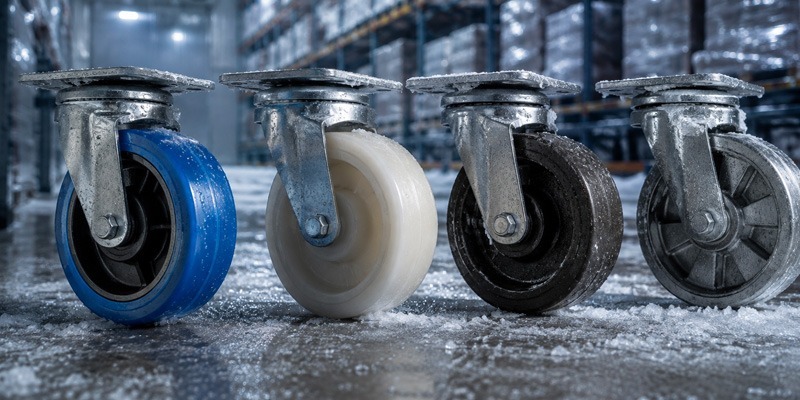
Temperature changes influence caster performance in several ways. Materials that remain flexible in cold conditions can provide better traction and smoother movement, while harder materials may offer better load capacity but create more vibration.
Some materials become brittle when exposed to sub-zero temperatures. Brittleness can increase the risk of cracking when uneven floors, door thresholds, or heavy loads strike wheels.
Cold temperatures can also affect lubricants inside bearings. If bearing grease thickens, rolling resistance increases, and equipment becomes harder to move. Many cold storage applications require sealed bearings or components designed specifically for refrigerated environments.
The ideal material should provide a balance between thermal shock resistance, moisture resistance, load capacity, and wheel durability. There is no single caster wheel material that performs perfectly in every cold storage application.
Comparing the Most Common Caster Wheel Materials
Different types of casters offer different advantages in freezer and refrigerated environments. The right choice depends on how the equipment is used and the conditions it faces.
|
Material |
Cold Performance |
Main Benefits |
Common Applications |
|
Polyurethane |
Good with cold-rated formulations |
Floor protection, quiet operation, wear resistance |
Food processing carts, warehouse equipment |
|
Nylon |
Very good |
High load capacity, moisture resistance, and low rolling resistance |
Heavy-duty freezer carts and racks |
|
Phenolic |
Good |
Dimensional stability, strong load support |
Industrial racks and equipment |
|
Rubber |
Moderate |
Shock absorption, grip, noise reduction |
Indoor carts and lighter applications |
|
Metal |
Excellent load capacity |
Extreme durability and high-temperature capability |
Heavy industrial equipment |
Polyurethane Casters
Polyurethane casters are among the most commonly selected options for industrial and commercial cold storage equipment. They provide a good balance of floor protection, wear resistance, and smooth movement.
One advantage of polyurethane is that it is gentler on floors compared with many metal options. This makes polyurethane suitable for facilities with sealed concrete, epoxy coatings, or finished flooring where surface protection matters.
Polyurethane casters also offer lower noise levels and good rolling performance. They resist many oils, chemicals, and moisture conditions, making them useful in food processing and warehouse environments.
However, standard polyurethane formulas may become stiffer in extremely low temperatures. Facilities operating in deep-freeze conditions should select polyurethane designs rated for cold environments.
Nylon Caster Wheels
Nylon caster wheels are commonly used where high load capacity and moisture resistance are priorities. Nylon performs well in many cold environments because it does not absorb significant moisture and maintains dimensional stability.
These wheels often provide lower rolling resistance, making them suitable for equipment that carries heavy loads. Their harder construction allows them to move efficiently across smooth industrial floors.
The trade-off is a firmer ride. Nylon caster wheels may transfer more vibration than softer materials, especially on uneven surfaces. They are often selected for warehouse racks, freezer carts, and heavy-duty material handling equipment where capacity matters more than noise reduction.
Phenolic Wheels
Phenolic wheels are made from resin-based materials designed for industrial applications. They offer strong load support, dimensional stability, and resistance to many workplace conditions.
Phenolic wheels can perform well in freezer environments, especially when equipment operates on smooth floors and requires substantial load capacity. They are commonly used on industrial racks, ovens, processing equipment, and material handling systems.
However, phenolic materials may not provide the same floor protection or shock absorption as softer wheels. Facilities should consider surface conditions before selecting them.
Rubber Casters
Rubber casters are valued for flexibility, grip, and vibration reduction. They provide a smoother ride and help reduce noise, making them useful where operator comfort and floor protection are important.
However, rubber performance can change in freezing conditions. Some rubber compounds lose flexibility at lower temperatures, reducing their effectiveness in demanding freezer environments.
Rubber casters are generally better suited for lighter-duty applications, indoor carts, and environments where shock absorption is more important than maximum load capacity.
Metal Casters
Metal casters, including cast iron and steel options, provide excellent strength and load support. They are often selected for heavy-duty caster wheels used on machinery, industrial equipment, and high-capacity material-handling systems.
Metal wheels maintain performance in extreme temperatures and can handle demanding loads. However, they may create more noise, transmit vibration, and potentially damage sensitive flooring.
For heavy industrial environments with durable floors, metal casters can be an effective choice. For food processing areas or facilities with finished flooring, other materials may provide better overall performance.
Thermal Shock Resistance Explained
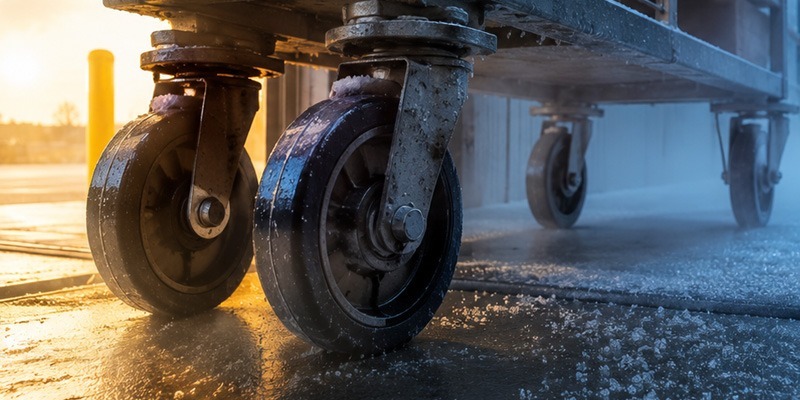
Thermal shock resistance refers to a material’s ability to withstand repeated temperature changes without cracking, weakening, or losing performance.
Cold storage equipment often moves between freezer rooms and warmer loading areas. This repeated transition creates stress as materials expand and contract.
Caster wheels with poor thermal shock resistance may develop surface cracks, become brittle, or experience reduced wheel durability over time. Bearings may also fail because temperature changes affect lubrication and moisture exposure.
When selecting casters for freezer applications, buyers should consider the complete environment rather than only the lowest operating temperature. Temperature cycling, cleaning procedures, impact loads, and travel frequency all influence long-term performance.
Why Moisture Resistance Matters
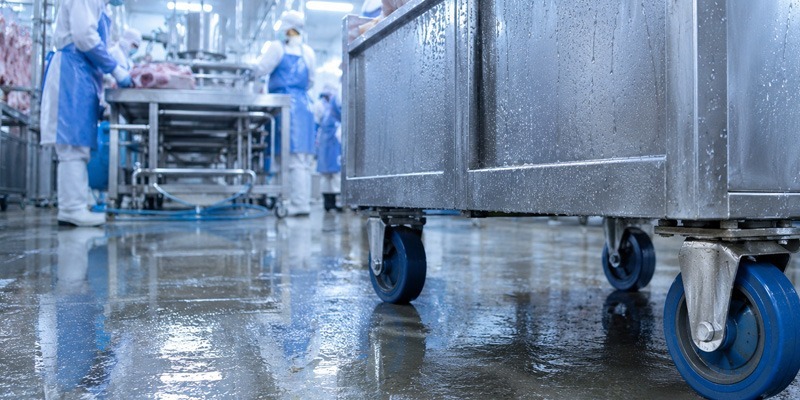
Moisture resistance is critical in cold storage because condensation and cleaning processes are common. Water exposure can affect bearings, mounting hardware, and wheel materials.
Industrial casters used in freezer environments often benefit from sealed bearings, corrosion-resistant components, and materials that maintain performance in moisture-exposed environments.
Food processing facilities especially require careful caster selection because equipment may experience frequent sanitation procedures. Choosing materials with suitable moisture resistance helps reduce maintenance needs and supports reliable equipment movement.
How Floor Protection Changes Material Selection
Floor conditions should influence caster selection as much as temperature. A freezer facility with polished concrete may require different wheels than a warehouse with rough industrial flooring.
Polyurethane and rubber casters generally provide better floor protection because they distribute pressure and reduce marking. They are useful where surface damage must be minimized.
Harder materials, such as metal or certain phenolic wheels, may provide greater load capacity but can cause greater impact on sensitive floors. Buyers should balance load requirements with the need to protect the operating surface.
How Rolling Resistance Impacts Worker Safety
Rolling resistance affects how much force operators need to move equipment. High rolling resistance increases the pushing effort and may contribute to fatigue during repeated material-handling tasks.
Caster wheels with lower rolling resistance allow carts and equipment to move more easily, improving workflow and reducing physical strain. Proper wheel diameter, bearings, load distribution, and material selection all influence movement.
For facilities using heavy carts or frequent transport routes, choosing the correct caster material can improve daily operations and reduce unnecessary effort.
Best Caster Materials for Cold Storage Applications
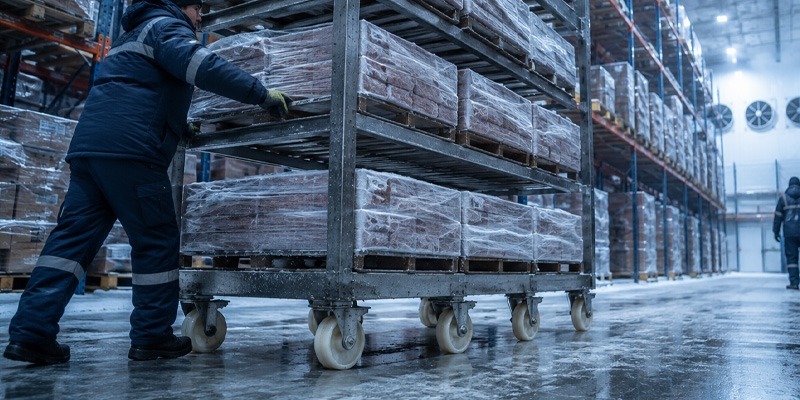
Different facilities have different priorities-
- Frozen food facilities- Polyurethane casters and nylon caster wheels are commonly used because they balance moisture resistance, cleaning requirements, and load capacity.
- Pharmaceutical cold rooms- Low-noise polyurethane and corrosion-resistant components may be preferred where cleanliness and controlled movement matter.
- Refrigerated warehouses- Nylon and polyurethane options often provide reliable movement for storage racks and carts.
- Seafood and meat processing- Materials with strong moisture resistance and easy maintenance are important due to frequent sanitation.
- Heavy distribution centers: Heavy duty caster wheels made from nylon, phenolic, or metal may be selected based on load requirements.
How to Choose the Right Caster for Your Facility
Before selecting industrial caster wheels for cold storage, review-
- Operating temperature range
- Total load capacity
- Floor type and condition
- Cleaning frequency
- Moisture exposure
- Required movement speed
- Shock loading conditions
- Daily duty cycle
- Maintenance schedule
The best caster choice balances performance, maintenance, and operating conditions. A wheel that works well in one freezer environment may not be suitable for another.
Wrapping Up
Selecting the right caster material for cold storage facilities requires balancing temperature performance, moisture resistance, floor protection, rolling resistance, and load capacity. Polyurethane casters, nylon caster wheels, and phenolic wheels are common choices, while metal casters may be preferred for extreme loads.
Because every facility has different operating conditions, buyers should evaluate their equipment, environment, and movement requirements before choosing caster wheels. Atlanta Caster can help you identify suitable industrial casters and material-handling wheels for your specific application.
Frequently Asked Questions
1. What are the best casters for freezer environments?
The best casters for freezer environments depend on temperature, load, and floor conditions. Polyurethane casters, nylon caster wheels, and phenolic wheels are commonly used because they provide a balance of durability, moisture resistance, and load support.
2. Are polyurethane casters suitable for cold storage?
Yes, polyurethane casters can work well in cold storage when the correct cold-rated formulation is selected. They provide floor protection, wear resistance, and quieter operation compared with many harder wheel materials.
3. Do nylon caster wheels crack in freezing temperatures?
Nylon caster wheels generally perform well in cold environments because they maintain strength and resist moisture. However, application conditions, impact loads, and temperature range should always be considered.
4. Are phenolic wheels good for freezers?
Phenolic wheels can perform well in freezer applications that require high load capacity and dimensional stability. They are often used on industrial racks and equipment.
5. Which caster material offers the best moisture resistance?
Nylon and polyurethane often provide strong moisture resistance. The final selection depends on chemical exposure, sanitation requirements, bearings, and operating conditions.
6. What causes caster wheels to fail in cold storage?
Common causes include thermal cycling, moisture exposure, bearing failure, incorrect load ratings, ice buildup, and selecting a material that does not match the environment.
7. What is thermal shock resistance?
Thermal shock resistance describes a material’s ability to withstand repeated temperature changes without cracking, weakening, or loss of performance.
8. Which caster material has the lowest rolling resistance?
Harder materials such as nylon often provide low rolling resistance, although wheel size, bearings, load distribution, and floor conditions also affect movement.
9. How can I improve caster wheel durability in refrigerated warehouses?
Choose the correct material, use suitable bearings, maintain equipment regularly, avoid overloading, and select wheels designed for temperature and moisture conditions.
10. What factors affect caster wheel load capacity in cold environments?
Load capacity depends on wheel material, wheel size, number of casters, floor conditions, impact loads, temperature exposure, and frequency of equipment movement.