Email US
 Hours
 Visit Our Showroom


What Casters Are Best for Hardwood Floors So They Won't Scratch or Dent the Finish?
Nov 13th 2026
The best casters for hardwood floors generally have soft, non-marking treads made from rubber, thermoplastic rubber (TPR), or suitable polyurethane. These materials help protect wood finishes from scratches. Larger wheels with appropriately wide treads can also reduce concentrated pressure that causes dents. Scratches and dents require different preventive measures: scratches often result from hard wheels or trapped debris, while dents develop when heavy loads press against a small area. For offices, furniture, studios, and showrooms, choose properly rated soft-tread casters and keep the wheels clean.
Hardwood-floor-safe casters are defined primarily by their tread properties and the pressure they place on flooring, not simply by their brand.
Atlanta Caster & Equipment supplies soft-tread wheels alongside harder materials intended for industrial floors. Although we sell both, hard metal and phenolic wheels are generally not our first recommendation for finished hardwood.
For other surfaces, see our guide to choosing caster wheels for your floor type.
Scratches and Dents Are Two Different Hardwood Floor Problems
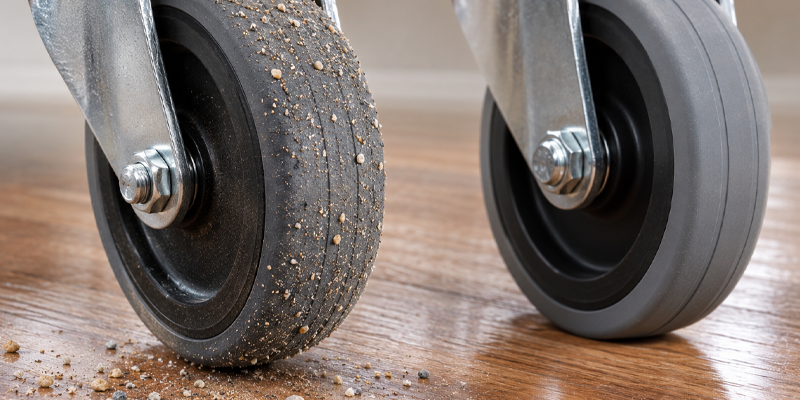
Scratches generally result from hard wheel surfaces or trapped debris, while dents develop when heavy loads concentrate pressure on a small area.
A caster can leave hardwood flooring visibly damaged even when the wheel itself appears undamaged.
Understanding the difference between scratches and dents helps buyers select the correct wheel.
What Causes Scratches?
Scratches affect the surface finish or underlying wood.
They commonly occur when:
- Hard caster treads roll across sensitive finishes.
- Sand or grit becomes embedded in a wheel.
- Damaged swivel mechanisms cause wheels to drag sideways.
- Equipment is pushed while a caster is jammed.
Even hardwood finished with polyurethane coatings can develop scratches from repeated abrasive contact.
What Causes Dents?
Dents occur when concentrated pressure compresses the wood beneath the caster.
A heavy display fixture resting on narrow wheels can create pressure points, particularly when the equipment remains stationary for extended periods.
Engineered wood flooring may also be vulnerable, depending on its construction, finish, and supporting subfloor.
The distinction matters: A softer tread helps reduce scratching, but preventing dents also requires appropriate wheel dimensions and load distribution.
For more information about surface behavior, read Atlanta Caster's guide to choosing the right caster for different surfaces.
Which Caster Tread Materials Protect Hardwood Floors?
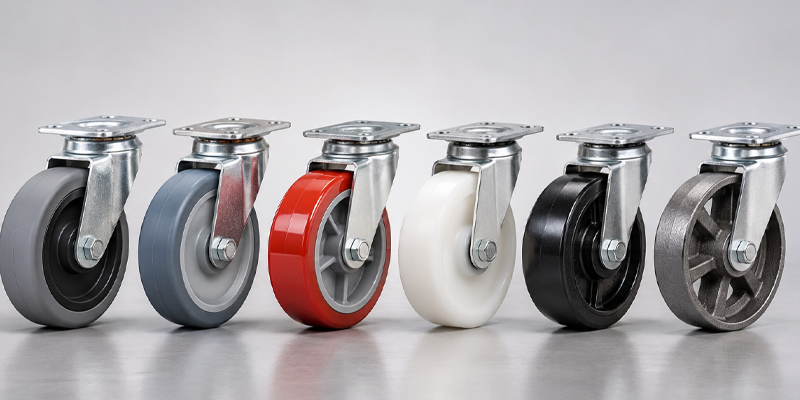
Soft rubber, thermoplastic rubber, and suitable softer polyurethane wheels generally provide better hardwood-floor protection than rigid metal or hard plastic treads.
Different wheel materials respond differently to floor finishes, loads, and movement.
Comparing Caster Materials for Hardwood
|
Wheel Material |
Why It Can Protect Hardwood |
What to Keep in Mind |
|
Soft rubber |
Flexible tread cushions contact and reduces rolling noise |
Confirm non-marking properties and load capacity |
|
Thermoplastic rubber (TPR) |
Offers cushioning and quiet movement in suitable formulations |
Hardness and performance vary by product |
|
Softer polyurethane |
Can combine floor protection with greater load support in appropriate designs |
Not every polyurethane wheel is soft or non-marking |
|
Hard nylon |
Rolls readily on firm industrial floors |
Rigid tread can increase floor-damage risk |
|
Phenolic |
Suitable for many demanding industrial applications |
Hard surface generally makes it unsuitable for delicate hardwood |
|
Cast iron or steel |
Supports demanding industrial loads |
Direct contact can scratch or dent finished wood |
Table note: Qualitative comparison based on general material characteristics and Atlanta Caster's published floor-selection guidance. Actual suitability depends on the individual wheel and flooring.
Are Rubber Casters Safe for Hardwood Floors?
Rubber casters for hardwood floors are generally suitable when they feature soft, non-marking compounds.
Their flexible treads can absorb some vibration and reduce the likelihood of surface scratching.
However, traditional black rubber may leave visible marks on certain finishes.
Review the manufacturer's non-marking designation before purchasing rubber caster wheels.
Do Polyurethane Casters Damage Hardwood?
Suitable softer polyurethane casters can work well on hardwood flooring.
Polyurethane offers varying levels of hardness, so the material name alone does not establish floor safety.
Choose a tread specifically recommended for finished wood, with an appropriate load rating and contact area.
Atlanta Caster supplies polyurethane casters in several constructions.
Expert Insight #1: Clean Wheels Matter as Much as Wheel Material
Certified Caster Specialist Perspective
One easily overlooked cause of hardwood damage is debris trapped inside an otherwise suitable soft wheel.
Sand and grit can become embedded in the tread. As the wheel rolls, these particles can scratch the finish much like sandpaper.
Regularly inspecting and cleaning casters is particularly important in retail showrooms, studios, and offices where outdoor debris enters the building. A soft wheel that is never cleaned may still damage an expensive wood floor.
Wheel Diameter and Load: How to Prevent Dents Before They Happen
Choose the largest practical wheel diameter, an appropriately wide tread, and sufficient caster capacity to reduce concentrated pressure on hardwood.
A wheel can protect the finish from scratches and still leave dents if the equipment is too heavy for the available contact area.
This is especially important for stationary furniture and fixtures.
Why Wheel Diameter Matters
Larger-diameter wheels generally cross minor floor irregularities more easily.
They can also provide a larger contact area, depending on tread construction and load.
However, diameter alone does not guarantee lower floor pressure. Tread width, hardness, and deformation under load also influence contact pressure.
A wider tread may distribute weight over more of the flooring, provided it remains suitable for the equipment.
How Much Weight Can Each Caster Support?
Start with the equipment's fully loaded weight and divide it among the supporting casters, allowing additional capacity for uneven weight distribution and movement.
The complete caster's published load rating must meet the application requirements.
For further guidance, see the guidance on calculating caster load capacity.
Why Stationary Loads Need Attention
A rolling cart distributes contact over different sections of the floor as it moves.
A stationary fixture places pressure on the same areas for extended periods.
For example, a heavy retail display or equipment rack parked on narrow casters may eventually leave visible impressions.
The flooring's construction and finish also influence this risk.
Expert Insight #2: A Caster Can Support the Load and Still Dent the Floor
Certified Caster Specialist Perspective
Buyers sometimes assume a caster is suitable because it supports the equipment without breaking or flattening.
However, caster capacity and hardwood-floor protection are separate considerations.
A wheel may carry its rated load while concentrating enough pressure to mark softer wood over time.
For heavy fixtures, evaluate the expected stationary load, tread width, wheel hardness, and flooring construction together. If you're uncertain, contact Atlanta Caster with the equipment weight and floor details before purchasing.
What Furniture Casters Work Best on Hardwood Floors?
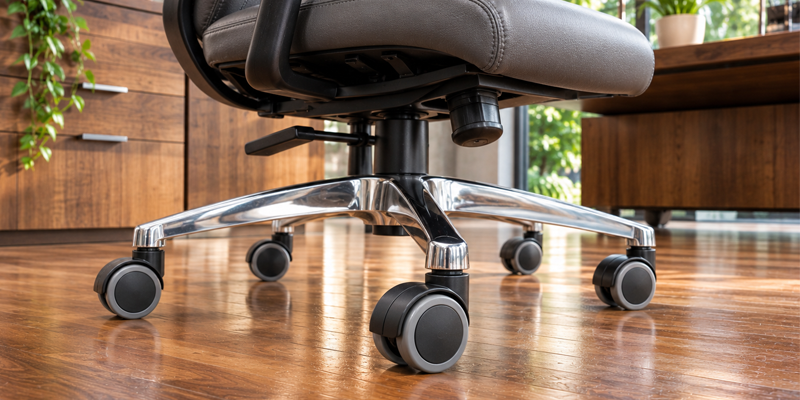
Furniture casters for hardwood floors should have soft, non-marking treads, suitable load capacity, and mounting hardware compatible with the furniture.
Offices, studios, retail stores, and home workspaces frequently use rolling furniture on finished wood.
Common applications include office chairs, mobile tables, display fixtures, equipment stands, and audiovisual carts.
Each application presents different requirements.
Office Chairs and Seating
Office chairs move frequently and change direction often.
Soft-tread hardwood floor casters may help protect finished surfaces, but the stem must fit the chair base.
A caster that fits loosely can wobble or become unstable.
Retail Displays and Movable Fixtures
Retail showrooms may use rolling fixtures to rearrange merchandise or change displays.
For heavier furniture, wheel width and capacity deserve particular attention.
Brakes may also be appropriate where fixtures must remain stationary.
Studio and Entertainment Equipment
Film studios, performance venues, and recording facilities may move equipment across hardwood stages or finished wood floors.
These applications benefit from non-marking wheels and controlled movement.
For heavy equipment, the caster and flooring specifications should be reviewed together.
Confirm the Correct Mounting Type
Furniture and fixture casters may use threaded stems, grip-ring stems, grip-neck stems, or mounting plates.
The replacement must match the original attachment requirements.
Atlanta Caster's guide to measuring casters explains which dimensions to check before ordering.
A 5-Point Hardwood-Safe Caster Checklist Before You Buy
The right hardwood-safe casters combine suitable tread softness, adequate wheel dimensions, correct capacity, clean rolling surfaces, and dependable swivel performance.
Use this checklist when selecting replacement wheels for hardwood floors.
- Choose a soft, non-marking tread. Look for rubber, TPR, or suitable polyurethane wheels specifically recommended for finished floors. Confirm the manufacturer's non-marking designation.
- Select the largest practical wheel diameter. Larger wheels generally cross minor irregularities more readily. Check available mounting clearance and consider tread width when evaluating floor pressure.
- Check load capacity with a margin. Include the equipment's maximum working weight. Account for uneven weight distribution, movement, and prolonged stationary loading.
- Keep wheel treads clean. Remove grit, sand, and embedded debris regularly. Inspect for rough spots, cracks, and damage that could scratch the finish.
- Check swivel movement and wheel rotation. Casters should rotate and swivel freely without dragging. Worn bearings or restricted swivel movement may cause sideways scraping.
These checks help reduce avoidable damage, but no caster can guarantee that hardwood flooring will remain completely free of scratches or dents.
Getting the Right Hardwood-Safe Casters from Atlanta Caster
Atlanta Caster helps customers compare caster materials, load requirements, and mounting options for hardwood-floor applications.
Founded in 1982, Atlanta Caster & Equipment serves commercial and industrial customers from its Tucker, Georgia, location.
The company supplies rubber caster wheels and polyurethane casters in different sizes and mounting configurations.
Exact floor compatibility, tread hardness, load ratings, and current availability must be verified for each model.
Atlanta Caster also assists with application analysis and the selection of replacement casters.
Customers near Tucker can visit the company's showroom at 1810 Auger Drive.
The company generally offers shipping within 24–48 hours for stocked items, subject to confirmation at the time of ordering.
Need help identifying your existing caster?
Call 1-800-526-3087 or send us a photo of your caster along with its measurements, equipment weight, and flooring details.
Frequently Asked Questions
What casters are best for hardwood floors so they won't scratch or dent the finish?
The best casters for hardwood floors generally use soft, non-marking rubber, TPR, or suitable polyurethane treads. Softer materials help reduce scratching, while appropriately sized, wider wheels can reduce concentrated pressure that causes dents. Always confirm load capacity and flooring compatibility, and keep the wheels free of abrasive debris.
Will rubber casters scratch hardwood floors?
Soft, non-marking rubber casters are generally suitable for hardwood, but they cannot guarantee scratch-free movement. Dirt or grit trapped in the tread can damage the finish. Some rubber compounds may also leave visible marks. Choose verified non-marking wheels and inspect them regularly for embedded debris and wear.
Are polyurethane casters safe for hardwood?
Some polyurethane casters are suitable for hardwood floors, particularly models with softer, non-marking treads. However, polyurethane wheels are available in different hardness levels. Harder industrial models may not provide enough cushioning for delicate finishes. Verify the manufacturer's floor recommendations, wheel dimensions, and load capacity before purchasing.
What caster wheel materials should I avoid on wood floors?
Hard metal, cast iron, phenolic, and rigid nylon wheels are generally poor choices for finished hardwood because they can concentrate pressure or increase the risk of scratching. These materials may work well on industrial floors, but delicate wood surfaces typically benefit from softer, non-marking treads and suitable wheel dimensions.
How do I stop casters from denting a hardwood floor?
Reduce concentrated pressure by choosing appropriately sized wheels with suitable tread width and sufficient load capacity. Avoid exceeding the floor's loading limitations. Heavy fixtures that remain stationary for long periods need particular attention. Verify the flooring manufacturer's recommendations when selecting casters for substantial or concentrated loads.
What size caster wheel is best for hardwood?
There is no single wheel diameter suitable for every hardwood-floor application. Larger wheels generally cross small floor irregularities more easily, while tread width and softness influence contact pressure. Choose the largest practical diameter that fits the equipment, maintains stability, and meets the required load rating.
What casters should I put on furniture or chairs used on hardwood?
Furniture and chairs used on hardwood generally benefit from soft, non-marking rubber, TPR, or suitable polyurethane casters. Choose wheels rated for the furniture, its occupants, or its contents. Confirm the correct stem or mounting plate dimensions, and check that the wheels rotate freely without dragging.
Why are my casters leaving marks even though they're rubber?
Rubber casters may leave marks because the tread compound is not non-marking, or because debris has become embedded in the wheel. Worn treads and restricted swivel movement can also cause scuffing. Clean the wheels, inspect for damage, and confirm the manufacturer's floor-compatibility recommendations before replacing them.
Protect Your Hardwood Floors with the Right Casters
For help choosing suitable wheels for furniture, office equipment, retail displays, or studio carts, call Atlanta Caster & Equipment at 1-800-526-3087 or contact the team.
About Atlanta Caster & Equipment
Founded in 1982, Atlanta Caster & Equipment, Inc. is a caster, wheel, and material-handling equipment distributor based in Tucker, Georgia. The company assists commercial and industrial customers with product selection, replacement caster requirements, and application-specific equipment needs.