Email US
 Hours
 Visit Our Showroom


Non-Marking Caster Wheels: Which Materials Actually Protect Your Floors
Nov 2nd 2026
Non-marking caster wheels use specially formulated tread materials that resist leaving visible streaks or residue on floors. Common choices include thermoplastic rubber, certain polyurethane compounds, and specially formulated rubber. However, a wheel that doesn't leave marks isn't necessarily safe for every floor.
For hospitals, food processing plants, warehouses, and retail facilities, choosing the right caster involves more than checking tread color. Load capacity, floor sensitivity, and operating conditions also matter.
This guide explains how non-marking wheels work, which materials offer floor protection, and what to check before purchasing replacement casters for your equipment.
Marking vs. Non-Marking Caster Wheels: What's the Difference?
The main difference between marking and non-marking caster wheels is whether their tread materials leave visible streaks or residue when in use.
Marking occurs when wheel material transfers onto flooring through friction, particularly during sharp turns, dragging, or heavy loading. Dirt and debris embedded in the tread can also cause visible marks.
However, three important wheel properties are often confused:
|
Property |
What It Means |
Primary Benefit |
|
Non-marking |
Tread resists leaving visible streaks or residue |
Maintains clean floor appearances |
|
Non-staining |
Material resists causing chemical discoloration |
Prevents staining during prolonged contact |
|
Floor-protecting |
Wheel construction reduces the risk of dents, scratches, and gouges |
Helps preserve flooring surfaces |
A wheel can be non-marking but still damage flooring if its tread is too hard or its load is excessive.
Likewise, a softer wheel may reduce floor damage but may leave marks if its rubber compound transfers onto the surface.
When selecting casters, check all three properties rather than assuming they mean the same thing.
Which Wheel Materials Are Non-Marking?
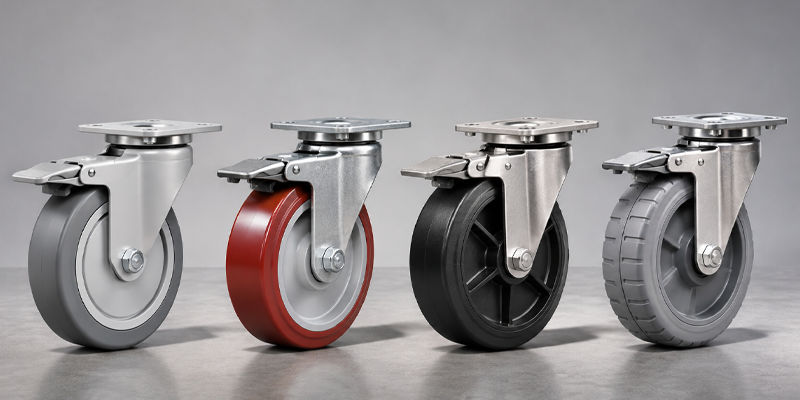
Non-marking caster wheels are available in several materials, but their performance depends on the specific tread formulation.
Here is how common industrial caster materials compare.
Thermoplastic Rubber Wheels
Thermoplastic rubber (TPR) combines rubber-like flexibility with thermoplastic construction.
Atlanta Caster & Equipment identifies thermoplastic casters as non-marking, making them suitable for clean rooms and facilities where floor appearance matters.
Their resilient treads also help reduce vibration and rolling noise.
For equipment operating across sensitive indoor surfaces, non-marking thermoplastic casters are a strong starting point.
Polyurethane Wheels
Polyurethane wheels offer wear resistance, load-bearing performance, and floor protection.
They are commonly selected for industrial carts requiring greater load capacity than some softer alternatives.
However, not every polyurethane formulation is certified as non-marking.
Review individual product specifications before purchasing polyurethane casters for applications where visible streaks are unacceptable.
Solid Elastomer Wheels
Solid elastomer wheels provide excellent floor protection while supporting demanding industrial applications.
Their resilient construction helps reduce concentrated pressure and absorb some vibration during movement.
Although they offer floor-protecting properties, their non-marking status must be confirmed for the specific product.
Rubber Caster Wheels
Are all rubber wheels non-marking? No.
Rubber wheels are available in soft, hard, and mold-on constructions, with different tread compounds.
Traditional black rubber formulations may leave dark streaks on light-colored flooring.
Gray or specially formulated rubber can offer non-marking performance, but color alone doesn't guarantee it.
Always check specifications when selecting rubber caster wheels.
Hard-Tread Materials
Phenolic, nylon, cast iron, and steel wheels are generally chosen for demanding loads, operating conditions, or heat resistance rather than delicate floor protection.
Their harder surfaces can increase the risk of concentrated floor pressure.
Caster Material Comparison
|
Wheel Material |
Non-Marking Status |
Floor Protection |
|
Thermoplastic rubber |
Confirmed by ACE |
Resilient tread |
|
Polyurethane |
Check product specifications |
Yes |
|
Solid elastomer |
Check product specifications |
Excellent |
|
Soft or hard rubber |
Depends on compound |
Varies |
|
Phenolic and nylon |
Check product specifications |
Limited on delicate floors |
|
Cast iron and steel |
Not verified |
Generally unsuitable for delicate floors |
Note: Non-marking classifications reflect the supplied Atlanta Caster product information. Additional manufacturer verification is needed for individual wheel models.
What Are Non-Marking Caster Wheels Used For?
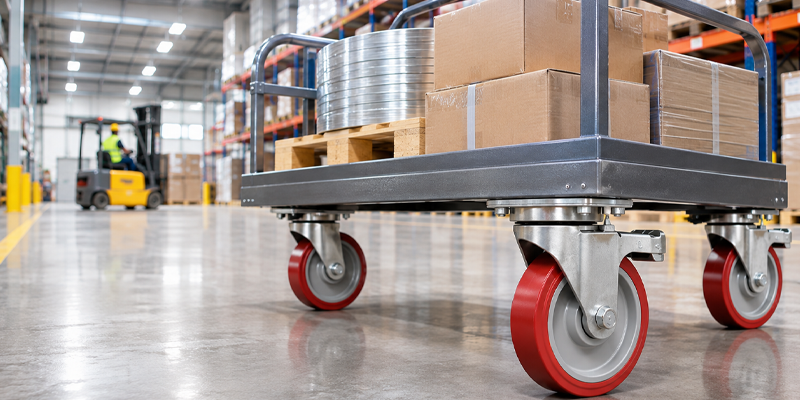
Non-marking caster wheels are used wherever moving equipment must avoid leaving visible streaks on flooring.
They are particularly valuable in facilities with regular cart movement, strict cleanliness requirements, or expensive finished surfaces.
Hospitals and Healthcare Facilities
Hospitals use mobile equipment, medication carts, and supply trolleys throughout patient rooms and corridors.
Non-marking wheels help maintain the appearance of the floor, while resilient treads can reduce rolling noise.
Facilities can compare casters for medical equipment when selecting replacements.
Food Processing Plants and Bakeries
Food facilities need caster wheels that resist floor marking while tolerating their operating environment.
Washdown exposure, cleaning chemicals, and temperature conditions must also be considered.
A non-marking designation alone does not establish washdown suitability.
Laboratories and Clean Rooms
Laboratories often have sensitive flooring and strict housekeeping requirements.
Non-marking thermoplastic wheels may help minimize visible residue from regular equipment movement.
Retail and Grocery Stores
Stock carts and display equipment frequently move across polished or sealed flooring.
Non-marking wheels help reduce visible streaks in customer-facing aisles.
Studios and Entertainment Facilities
Production crews regularly reposition lighting stands, equipment carts, and set materials.
For studios and entertainment facilities, selecting suitable treads helps protect finished stage surfaces.
Epoxy-coated industrial floors can also benefit from appropriate non-marking wheel compounds.
Heavy-Duty Non-Marking Caster Wheel Options

Heavy-duty non-marking caster wheels must balance load capacity with floor protection.
Softer tread materials can reduce surface damage, but they may deform or become difficult to roll under excessive loads.
For heavier industrial carts, polyurethane and solid-elastomer wheels are worth considering.
Polyurethane provides wear resistance and load-bearing performance while helping protect flooring. Solid elastomer casters offer another option where resilient treads and floor protection matter.
However, confirm non-marking certification for the exact wheel before ordering.
Wheel diameter also affects performance. Larger wheels generally roll more easily over minor surface irregularities and can reduce pushing effort.
Before purchasing, calculate the equipment's total loaded weight and select casters with suitable individual load ratings.
Never assume that all heavy-duty wheel materials are non-marking.
A product's rated load capacity, tread compound, diameter, and operating conditions should determine the final choice.
How to Tell If a Caster Wheel Is Non-Marking
The most reliable way to identify non-marking caster wheels is to check the manufacturer's product specifications.
Follow these steps before purchasing:
- Check the product description. Look for an explicit "non-marking" designation rather than relying on general claims about floor protection.
- Examine the tread material. Thermoplastic rubber and certain specialized compounds are common options.
- Consider wheel color carefully. Gray, white, or light-colored wheels may indicate non-marking formulations, but appearance is not proof.
- Perform a practical floor test. Where possible, roll and turn a representative wheel under its intended load on an inconspicuous surface or flooring sample.
- Ask the supplier. If specifications don't identify the tread as non-marking, request confirmation before placing an order.
During testing, check for streaks, embedded debris, and surface damage.
For demanding environments, request written confirmation of both non-marking and non-staining properties.
Hardwood, Vinyl, and Epoxy Floors: Which Casters Work?
Different flooring materials respond differently to wheel hardness and concentrated loads.
Hardwood floors: Resilient, clean treads can help reduce scratches and pressure damage. The best caster wheels for hardwood floors depend on the equipment's weight and the floor finish.
Vinyl floors: Soft, verified non-marking wheels help reduce visible streaks. Non-staining properties also matter when equipment remains stationary.
Epoxy floors: Choose wheels based on coating durability, load capacity, and abrasion resistance.
Regardless of flooring type, keeping caster treads free of debris helps prevent unnecessary damage.
For more detailed recommendations, read Atlanta Caster's guide to choosing caster wheels by floor type.
Common Mistakes That Still Leave Marks
Even properly selected wheels can cause problems when equipment isn't maintained or used correctly.
Common mistakes include:
- Assuming every gray or light-colored wheel is non-marking.
- Overloading soft treads, causing deformation, scrubbing, or flat spots.
- Allowing grit, metal shavings, or other debris to accumulate on wheel surfaces.
- Selecting hard wheels without considering flooring sensitivity.
- Replacing wheels without matching axle bore, hub length, and mounting requirements.
Routine inspection, proper cleaning, and correct load distribution help reduce marking and premature wheel wear.
Find the Right Non-Marking Caster Wheels at Atlanta Caster
Choosing the right casters starts with your floor material, equipment weight, and operating environment.
Atlanta Caster & Equipment offers thermoplastic casters, polyurethane wheels, and solid elastomer options for different industrial applications.
Need help selecting wheels that protect your floors?
Call Atlanta Caster & Equipment at 800-526-3087, or tell us your floor and load requirements so we can discuss suitable caster options.
Frequently Asked Questions
1. Can non-marking caster wheels be used outdoors?
Yes, some non-marking wheels can operate outdoors. However, suitability depends on tread material, weather exposure, ground conditions, and load capacity. Check the manufacturer's outdoor-use recommendations.
2. Do non-marking caster wheels wear out faster?
Not necessarily. Wheel lifespan depends on tread composition, load, flooring conditions, and maintenance. Properly rated non-marking wheels can provide dependable service in suitable applications.
3. Can I replace regular wheels with non-marking ones?
Yes, provided the replacement matches your equipment's load requirements, wheel diameter, axle bore, hub length, and mounting configuration. Confirm compatibility before purchasing.
4. What surfaces can non-marking caster wheels be used on?
Suitable products can operate on vinyl, hardwood, tile, epoxy-coated concrete, and other finished surfaces. Confirm both non-marking performance and floor compatibility for each application.